


Choose a swivel stool when turning the seat makes it easier to enter or face people in the room. Choose a non-swivel stool when people mainly face the counter and can get on and off without awkward repositioning. Neither choice automatically uses less space or makes the whole stool more stable.
For swivel vs non swivel bar stools, compare the same counter position and the people using it. Match seat height first with the bar stool height guide; then consider access, moving space and the feel of the complete stool.
Compare how people get on, turn and leave
A swivel lets the seat turn relative to the base. A non-swivel seat keeps its direction relative to the frame, so changing that direction means turning the whole stool. In either case, someone may still need to pull the stool away from the counter before sitting.
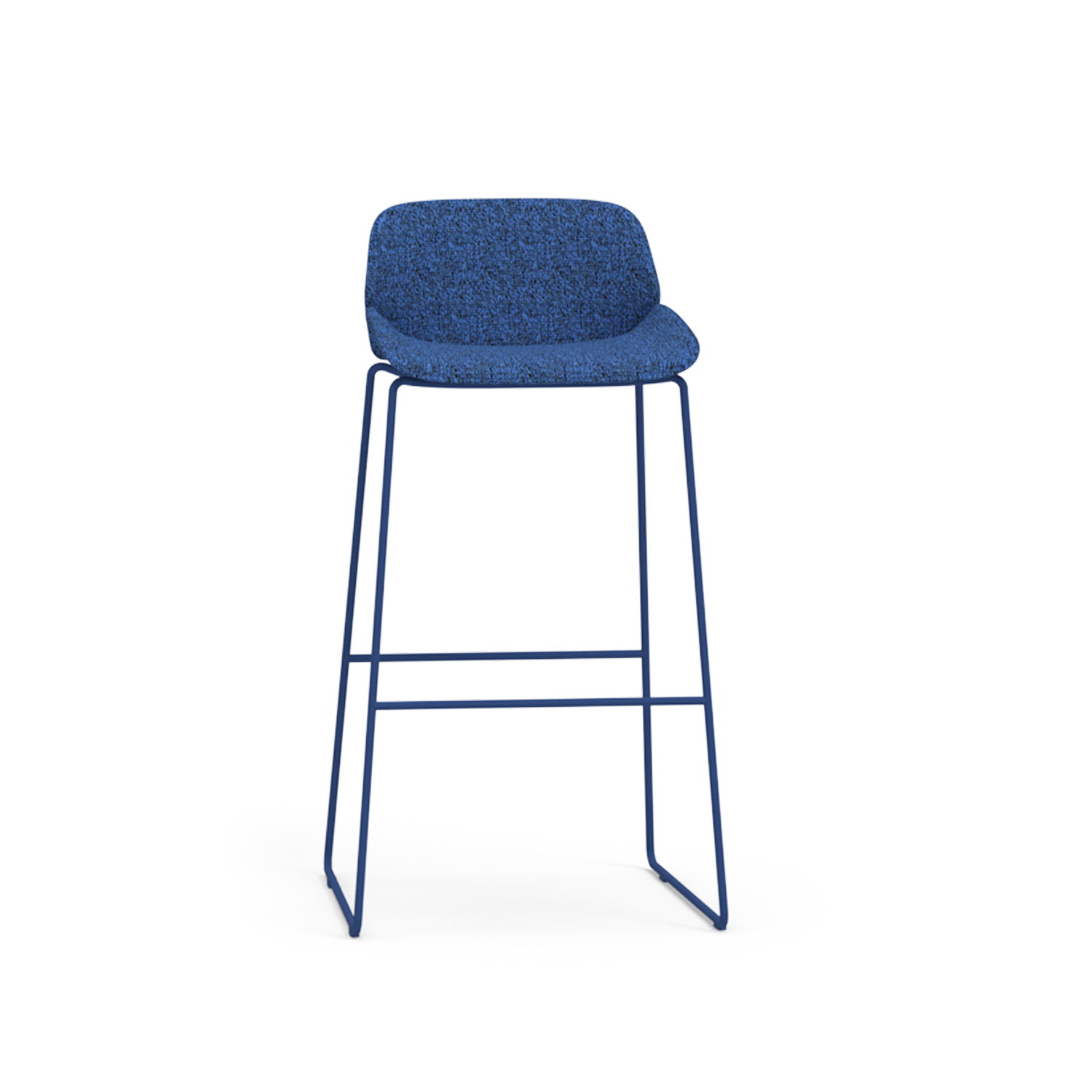
Blue Seashell stool with an upholstered back, seat and metal footrest.
How the two arrangements change access | ||
At the counter | Swivel | Non-swivel |
|---|---|---|
Approach from the side | Turning can present an opening toward the person, if the arms and back clear the surroundings. | Works when the open side already allows entry; otherwise the stool needs repositioning. |
Conversation toward the room | The seat can follow the change of direction within its allowed range. | The person turns within the seat or gets up and repositions the stool. |
Mostly forward-facing use | Turning may still help entry, but adds little if nobody needs that movement. | A useful candidate when the seat is easy to enter and already faces the task. |
Arms and a high back can change the route onto either design. Try the actual opening rather than assuming that a swivel means you can enter from every side. Once seated, the designated foot support should remain usable in the positions you intend to use.
Allow for people as well as moving parts
Turning space beside the counter
A rotating back, arm or square seat corner can travel outside the outline you see when the stool faces forward. At a corner or beside a wall, watch the complete path, including the return movement. Check height as well as width: an arm that passes beneath one part of the counter may hit a lower apron or support.
The person's knees, feet and elbows need space too. An empty seat turning without contact does not establish room for an occupied turn or a neighboring user. A fixed seat avoids that rotating path, but may need extra pull-out space to make entry possible.
Space behind the stool
Compare the position during use and after someone gets off. Leave the required circulation and exit routes clear; do not count a stool's parked outline as the whole usable space. If users repeatedly drag a swivel stool outward before turning, include that displaced position in the layout.
At a tight end seat, a non-swivel may avoid a back striking the wall if its entry route remains usable. At an open end used for conversation, a swivel may avoid repeatedly turning the whole frame. Neither is the space-saving winner without the actual shape and approach.
Rotation is not the same as wobble or tipping
Normal rotation: A swivel seat changes facing direction while the base stays on the floor. Turning alone is not a defect; check the permitted movement for the model.
Unexpected wobble: Rocking, looseness at the seat connection or uneven foot contact is different. A non-swivel can also develop damaged joints. Set an unexpectedly unstable stool aside and ask the supplier to assess it.
Tipping: This concerns the whole stool, its support footprint, assembly, floor contact and use. Removing the swivel does not prove a higher load rating or tipping resistance. Do not test by leaning to the tipping point, standing on it or rocking onto fewer feet.
HSE's seating guidance calls for checking wear and adjustment mechanisms and removing unsafe seating from use. Treat a change in movement as something to investigate, not as an unavoidable characteristic of every swivel stool.
Check return action, locks and upkeep separately
Turning range: a specified full rotation and a limited left/right turn are different. Use only the movement permitted for that model.
Automatic return: the seat moves toward a set facing direction after release. It does not pull the base back under the counter.
Rotation lock: a separate designed feature holds a permitted position. A returning seat is not necessarily locked; do not improvise a clamp or screw to stop it.
Inspect the moving connection
A swivel adds a moving seat-to-base connection to inspect. A non-swivel still has seat, frame and floor-contact parts that need care. Follow the manufacturer's inspection and service instructions; do not add lubricant or substitute a swivel plate just because another model uses it. Compare bar stool floor protectors separately from the rotating mechanism.
Try the real approach and exit
CCOHS recommends selecting seating for the person, workstation and task, and trying suitable samples in the real work situation. For a pantry comparison, try the same ordinary approach, seated turn and exit on each candidate, without turning it into a load or tipping test.
Shape remains part of the choice. SpaceUnited's Seashell upholstered bar stool has a curved upholstered back, metal frame and horizontal foot bars. Those parts illustrate why you need to look beyond a seat cushion when planning access: the back and feet have positions of their own.

Seashell stool detail labeling the backrest, cushion and metal legs.
Two related counter-seating questions
Does a swivel stool also adjust in height?
Not necessarily. Rotation changes direction; height adjustment changes the seat's vertical position. Check each feature separately for the exact model.
Does a tall swivel stool make a high counter accessible?
Not by itself. Where the U.S. accessibility provisions apply, dining and work surfaces have requirements for the approach, knee and toe space and surface height. Stool rotation does not resolve those requirements.
See the Access Board's dining and work surface requirements for that scoped U.S. context.
Match the movement to the counter position
Use a swivel where the allowed turn helps entry or conversation and the occupied movement clears the surroundings. Use a non-swivel where its facing direction and entry route already work. Compare the complete stool's condition and support on the floor in both cases; the label alone does not settle stability.
At the actual counter, confirm entry clearance, seat movement and permitted return or lock features before selecting a stool configuration.

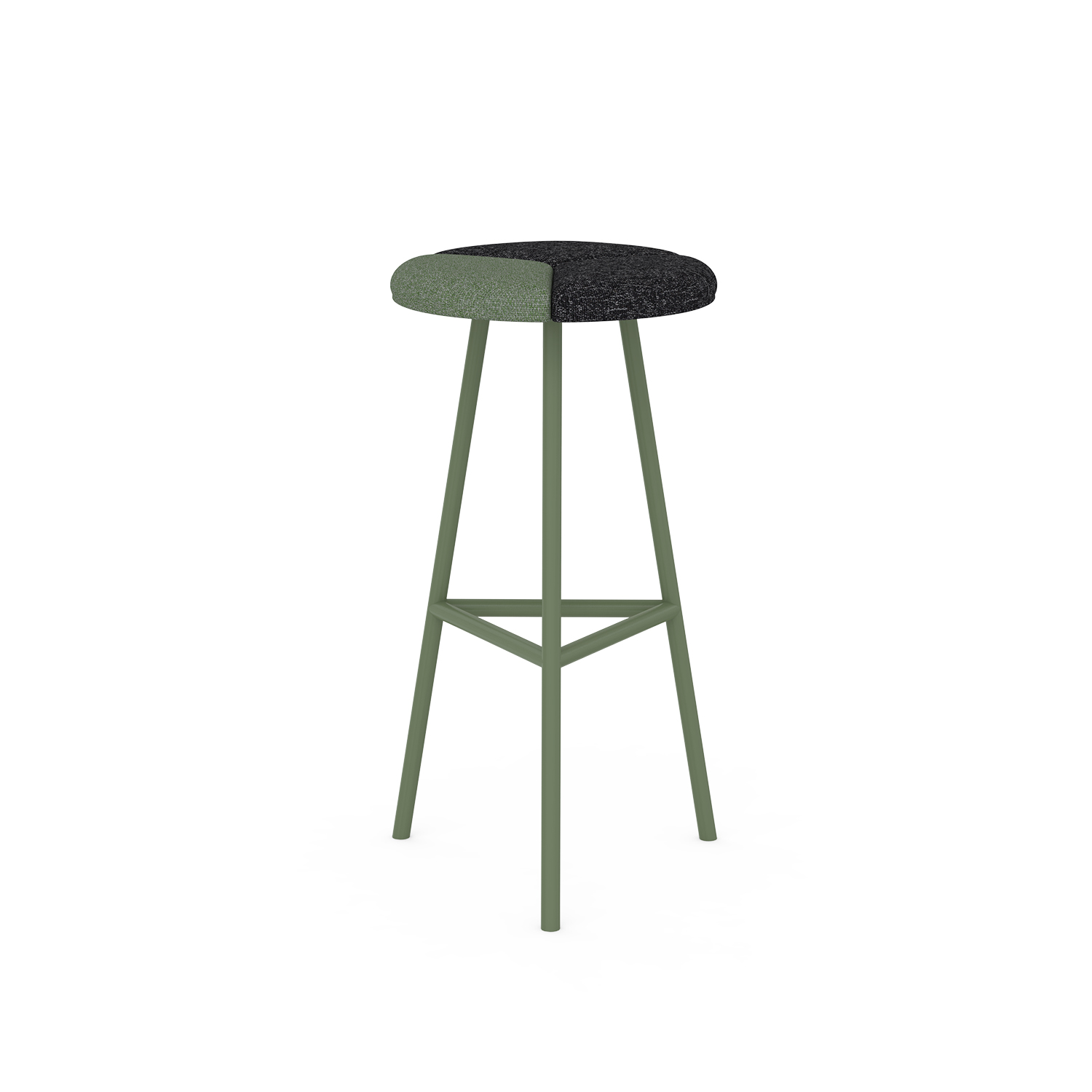

Counter Height vs Bar Height Stools: How to Choose the Right Seat Height
When comparing counter height vs bar height stools, start with the surface. A 40-42 inch bar generally pairs with a 28-30 inch seat, while a 34-36 inch counter generally pairs with a 24-26 inch seat. In either case, aim for roughly 9-12 inches between the top of the seat and the usable underside.
/ Read More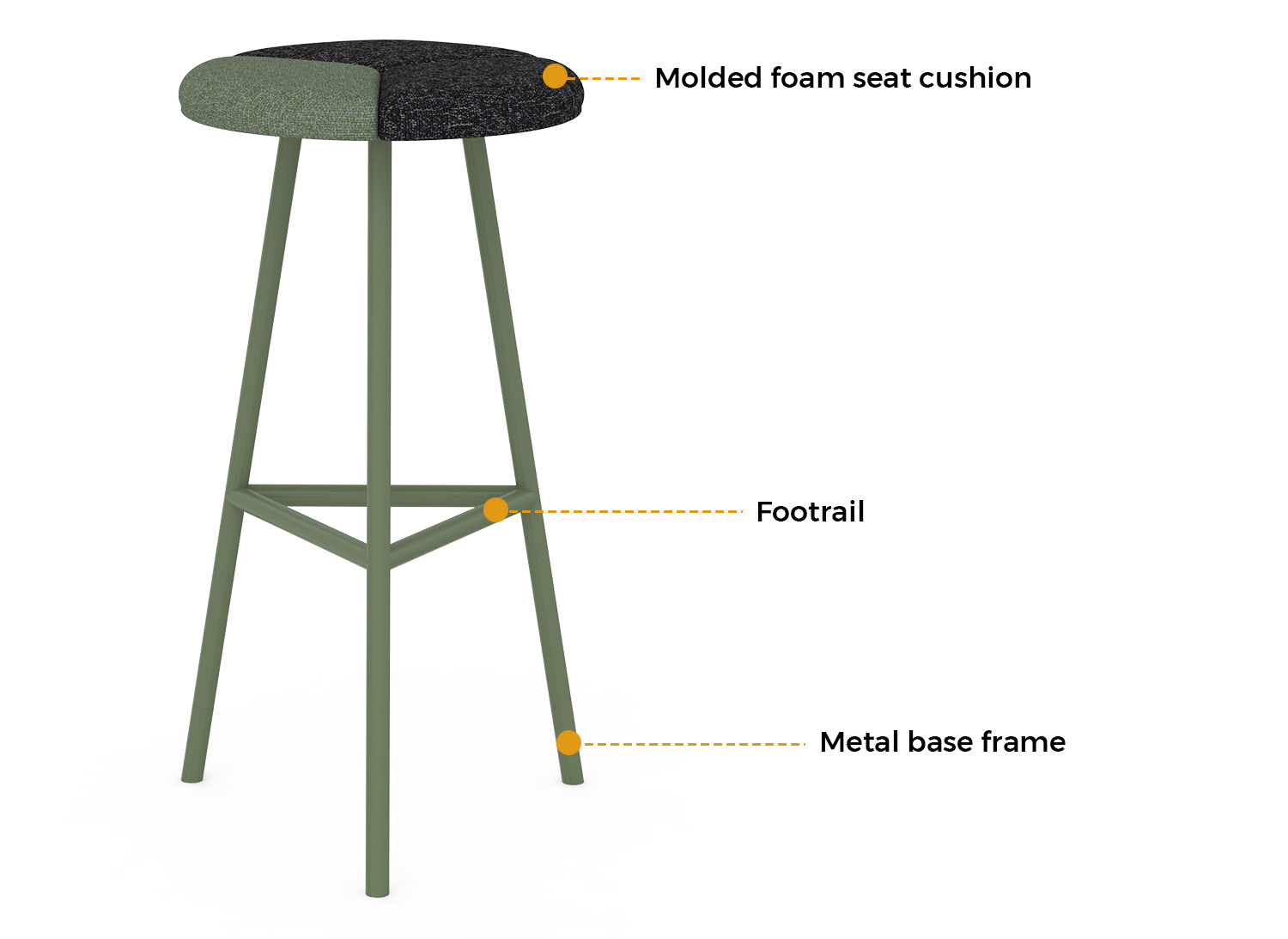
how tall are counter height bar stools
A stool can carry the right category label and still pin a sitter’s knees beneath a thick counter edge.The common mistake is reading the tallest number on the product page. On a backed design, that figure is usually overall height, while the dimension that controls fit runs from the finished floor t
/ Read More