


Commercial furniture is intended for business or institutional use; residential furniture is intended for private homes. The practical difference is the use the product is designed and supported for. A busy reception seat faces changing users and repeated cleaning, while a household armchair may serve a small, familiar group.
Commercial vs residential furniture is not a simple quality ranking. Either category can use wood, metal, fabric or leather, and either can look formal or relaxed. Commercial ranges may address shared-use demands through construction, finish choices and service options, but the category name does not guarantee those features on every model.
The main difference is the use it is designed for
Think of the categories as different design briefs. The contrasts below explain why the specifications can differ; they are not promises that every commercial item has stronger parts or every household item receives light use.
How the intended setting changes the furniture brief | ||
Aspect | Commercial or contract furniture | Residential furniture |
|---|---|---|
Users and activity | Business or institutional activity, often involving changing users, visitors or repeated daily use. | Private household activity and personal preferences. A home-office chair may still be used all day. |
Construction focus | Repeated sitting, movement, adjustment or opening can make joints, mechanisms and replaceable wear parts important specifications. | Construction serves the stated household task. A well-made domestic item can be substantial; its label does not establish suitability for a different duty. |
Materials and finishes | Surfaces may be selected around a site's cleaning routine, repeated contact and coordinated fit-out. | Texture, finish and appearance may be selected around the household's preferences and care habits. The same materials can appear in both categories. |
Maintenance and supply | Servicing several pieces, obtaining parts and matching replacements can matter to keeping a room available. | Care and replacement can be managed one item at a time, with more freedom to change the style. |
Warranty scope | Terms may cover specified workplace uses, with component, user or operating limits. | Terms may be limited to domestic use. Business use is not automatically included. |
Appearance | Can be formal, minimal or home-like; soft cushions do not make it residential-only. | Can resemble office furniture; appearance does not confer workplace suitability. |
For a particular model, compare its stated intended use, usable dimensions, joint and upholstery details, permitted cleaning method, replaceable wear parts and warranty scope. These details may confirm or overturn the category pattern in the table; a heavy frame or commercial label alone does not prove longer service life.
Where each category makes sense
Busy shared reception or meeting room: Start with models intended for that repeated shared use. A suitable commercial range can address the site's cleaning routine, user access and service needs together. Reject a candidate whose care method or stated use conflicts with the room, even if its styling is ideal.
Quiet private room or occasional-use corner: A residential piece may be worth considering if the supplier permits the actual business use and its fit, care and support suit the task. Lower visitor numbers reduce one demand, but do not override a home-use-only warranty or a product restriction.
Daily work in a home office: Residential location does not mean occasional use. A chair used for full days needs to fit the user and workstation regardless of its sales category. CCOHS purchasing guidance emphasizes the workers, tasks and environment, and recommends involving users in trying suitable furniture.
Commercial furniture used at home: It can be a useful choice when its adjustments, construction and repair options meet a real household need. The trade-off may be a footprint, finish choice or service arrangement that is unnecessary for that home. Check delivery access and everyday fit rather than paying for the label alone.
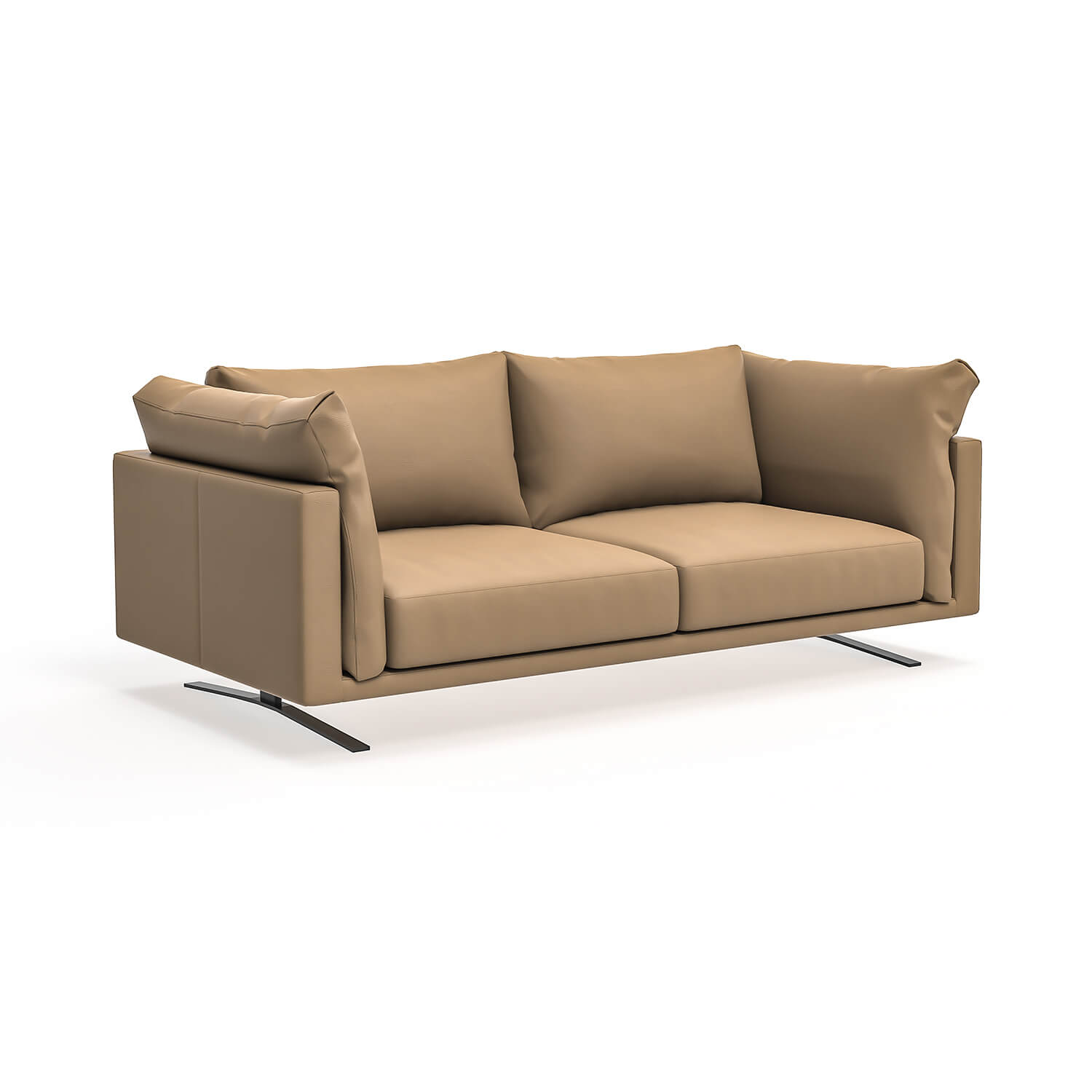
SpaceUnited upholstered sofa with cushions and slim dark feet.
For lounge seating dimensions and room layouts, the office sofa buying guide covers that separate part of the choice.
Commercial is not a test certificate or a warranty
Commercial grade is not a single universal certification. Tests address defined products and conditions. BIFMA's published standards guide distinguishes office seating, public and lounge seating, desks, storage and home-office or occasional-use furniture. These are different scopes; residential does not mean untested.

Sofa construction diagram showing a wood frame, webbing and serpentine springs.
Verify the exact test and configuration
Ask which test and edition apply to the actual model and configuration, and what the result covers. An upholstery rubbing result does not establish the strength of the frame or joints. A supplier offering tested products does not mean every item in its catalogue has the same result.
Check law and warranty separately
Legal requirements are separate from voluntary testing. In the United States, CPSC's upholstered furniture guidance explains smolder-resistance requirements for products within the defined scope of 16 CFR part 1640. A commercial or residential sales label does not replace checking the applicable product and destination rules, and smolder resistance does not mean fireproof.
Warranty wording is another separate question. A domestic-use-only warranty does not expand when the item is moved into an office. A commercial warranty can also exclude particular uses or components. Compare parts, labor, freight and the service location; the stated warranty period is not a prediction of service life.
Compare the cost of suitable alternatives
First compare items that serve the same function, with the same usable seating or storage capacity. A dining chair and an adjustable task chair are not equivalent simply because both provide a seat. A higher price is worthwhile only when the added features or support matter to the intended use.
Purchase and setup: item price, delivery, access requirements and assembly.
Care: the allowed cleaning routine, materials and time it will require.
Repair: available replacement parts, fitting labor, freight and time out of use.
Replacement: actual replacement prices and your own experience of comparable use, not an assumed lifespan for a whole category.
When future costs are uncertain, compare more than one plausible outcome. A cheaper item needing no replacement can cost less overall; extra repairs or replacements can change that result. Neither category guarantees the cheaper outcome.
SpaceUnited's SU-ST-Mod reception sofa shows that office seating can have a lounge appearance: low arms, separate seat and back cushions, and a choice of seating sizes. Those are configuration features, not proof of a particular test result, warranty or service life.
Mixing commercial and residential furniture
Can I mix residential and commercial pieces in one room?
Yes, if each piece suits its actual use and applicable requirements. An occasional side table and a continuously used chair need different specifications. Check how their heights, footprints and care routines work together.
Choose the use and support, not just the category
Commercial furniture is a useful starting point for shared business demands; residential furniture may suit a permitted, less demanding application or a particular household need. The useful comparison is the actual construction, care, test scope and support behind each candidate—not an assumed winner based on the label.
Explore the office sofa range once you know the room's use, size and service needs. Keep those requirements beside the product specifications when building a shortlist.
Ask for the intended-use and warranty terms of each shortlisted model before comparing prices for the room.




Standing Desks or Traditional Office Desks Furniture: Which Is the Better Choice
If you want to be healthier, have more energy, and feel better, a standing desk is usually the best. SpaceUnited has choices that help you move and stay awake. Look at this simple table that shows health and work benefits:
/ Read More
How to Pick the Right Office Desk Furniture for Your Workspace
Imagine you walk into your office and feel excited by your desk. When you choose office desk furniture that fits your needs, you work better and look more professional. SpaceUnited’s furniture helps you make a workspace that feels nice and helps you reach your goals.Good furniture makes workers feel
/ Read More
What Type Of Furniture Is Most Desirable For An Office?
What are the Different Types of Office Chairs?Sitting in a busy office, struggling with daily tasks, and the glow of computer screens is already a norm for you. But sitting on the wrong chair? That shouldn’t be. Office chairs are the most important tools needed in an office as they shape your comfor
/ Read More
What is Modular Office Furniture? A Complete Guide
What are the Different Types of Office Chairs?Sitting in a busy office, struggling with daily tasks, and the glow of computer screens is already a norm for you. But sitting on the wrong chair? That shouldn’t be. Office chairs are the most important tools needed in an office as they shape your comfor
/ Read More
SpaceUnited: Our Office Furniture is Now Live on MIC, Dec 16, 2025
SpaceUnited: Office Furniture Officially Launched on MIC – Dec 16, 2025We are thrilled to share exciting news with old and new friends from around the world: on December 16, 2025, SpaceUnited’s full range of office furniture products officially launched on Made-in-China.com (MIC). This milestone mar
/ Read More