


Bar stool materials are choices about different parts. Wood or metal may form the frame, while a hard seat or upholstered cushion forms the sitting surface. A metal frame with a fabric seat is not a compromise between two competing stool types; it combines a frame choice with a seat choice.
For visible grain that coordinates with timber furniture, consider a wood frame. For a painted or exposed-metal look, consider metal. For the seat, a hard face avoids cushion seams; upholstery adds a padded surface but also a cover and seams to care for. None of these choices alone guarantees comfort or strength.
Wood and metal frames: what actually changes
Compare equivalent parts: legs with legs, footrails with footrails, and finishes with finishes. A wood seat on steel legs needs separate care for each. Here, the rust discussion applies to iron and steel, not every metal sold in furniture.
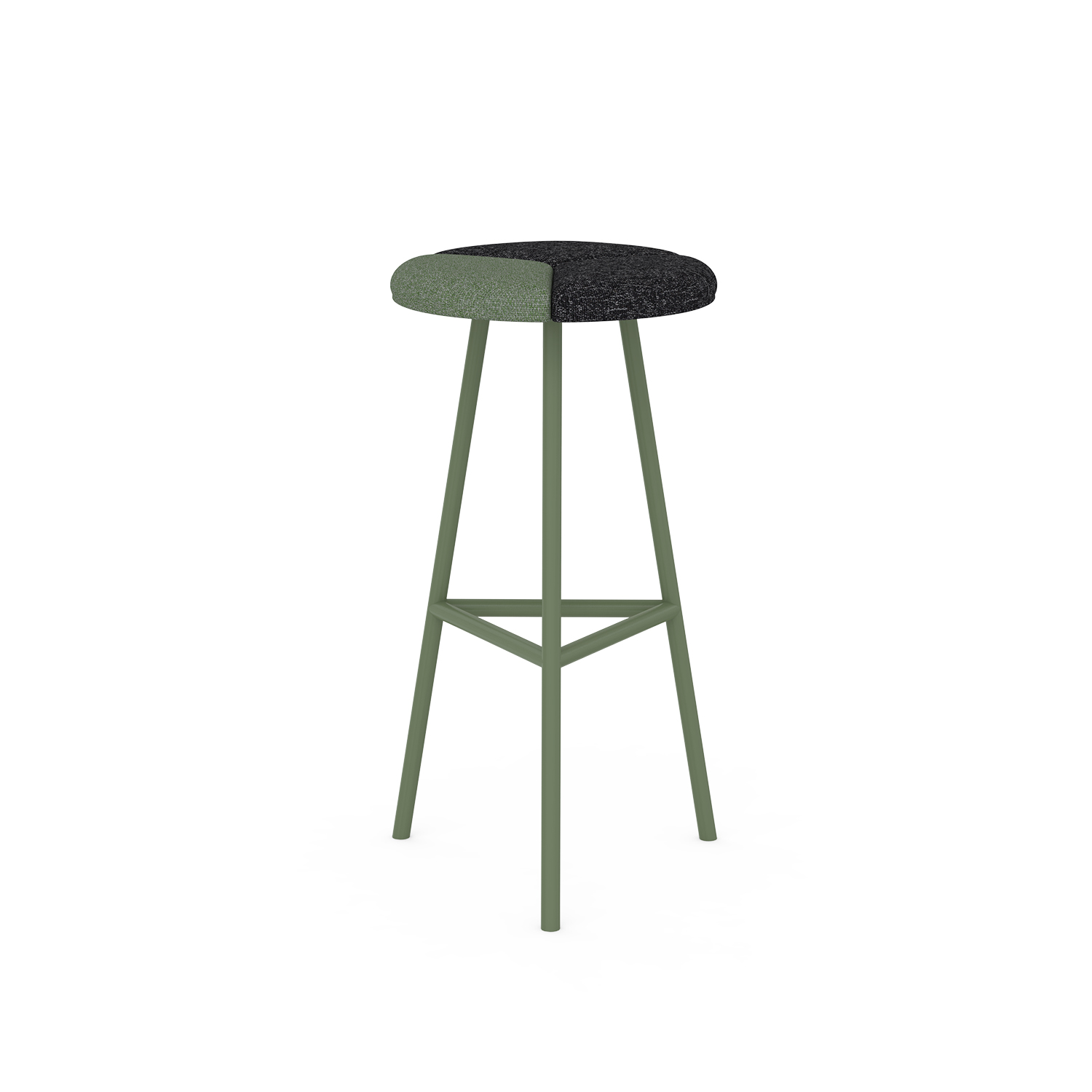
Petal stool with a cushioned seat, metal legs and footrest.
Frame trade-offs for indoor stools | ||
Feature | Wood frame | Metal frame |
|---|---|---|
Appearance | Natural grain can coordinate with wood tables and cabinetry; stain or paint changes the visible finish. | Exposed or coated metal gives a different visual finish; painted frames can add a solid color. |
Surface wear | Knocks can mark the finish or dent the wood. A visible grain surface and a painted surface may need different repair. | Knocks can dent parts or chip a coating. Damage through the coating may expose the metal beneath. |
Moisture | Wood absorbs and releases moisture, which can change its dimensions and affect the finish. | Iron and steel can corrode in the presence of water and oxygen; surface contamination also matters. |
Connections | Joints and seat attachments form part of the structure; the wood species alone does not describe their condition. | Welded or fastened connections form part of the structure; a metal label does not establish joint quality. |
Care and handling | Care follows the exposed finish. The complete stool's size and construction determine handling, not 'wood' alone. | Care also follows the finish. Metal construction does not automatically make the stool lighter or maintenance-free. |
The Canadian Conservation Institute describes wood's response to humidity and, separately, corrosion of iron. These explain material risks, not a prediction of how long a particular stool will last.
Its iron-care guidance identifies water, oxygen and contaminants as relevant to corrosion. Keep that distinction in mind when a product description only says 'metal'; identify the actual metal and finish.
Hard seats and upholstery: the sitting surface
Padding changes the sitting surface, but the seat shape, front edge, back and foot support still determine how the complete stool fits you. A fabric swatch cannot show how the assembled seat feels.
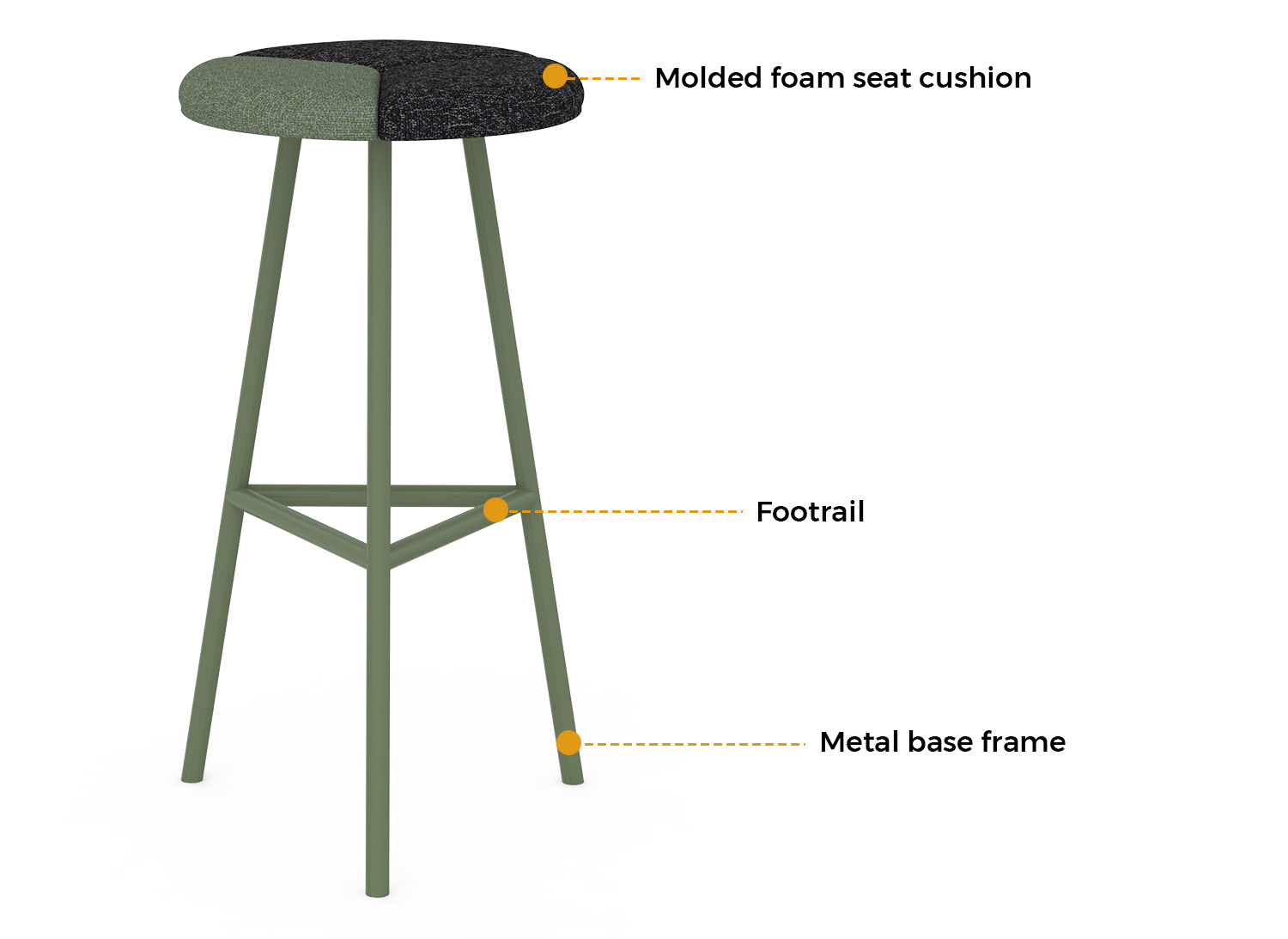
Petal stool detail showing the foam cushion, metal base frame and footrail.
Hard wood or metal: No fabric cover or cushion seam to work around when removing crumbs. You sit on its shape without a padded layer; the finish still needs suitable cleaning.
Fabric-covered cushion: Adds padding and textile texture, with choices of color and weave. Crumbs and liquid can reach seams or gaps. Spot cleaning depends on the exact cover and backing.
Leather-covered cushion: Combines a padded seat with a leather surface. Leather finish and stitching affect care; do not assume a household cleaner is suitable.
Synthetic-covered cushion: A continuous coated face may be convenient to wipe. Seams and the particular coating still matter. A leather-look finish is not leather and may need different care.
CCOHS recommends choosing seating for the person and task and trying it in the actual work situation. At a counter, that means sitting normally with foot support and noticing the seat edge and back contact. A soft cover does not correct an unsuitable seat height.
Use the bar stool height guide to match the seat to the counter and the people using it; material and height are separate choices.
Material combinations for indoor use
Food and drink counter with frequent crumbs: A simple hard seat removes cushion seams from the cleaning task. Pair it with the wood or metal frame that fits the room, and choose a finish compatible with the actual cleaning products. An intricate hard seat with inaccessible gaps can still be awkward to clean.
Lounge counter used for longer conversations: Include a padded, backed option in the sitting comparison when users want cushioning and back contact. Fabric brings a textile texture; leather or a synthetic cover offers a different sitting face and care routine. Choose by the complete seat trial, not a promise that upholstery guarantees comfort.
A room coordinated with timber furniture: A visible-grain wood frame can continue that appearance. Keep the seat hard if removing cushion care is the priority, or add upholstery for a padded face. Compare finish samples in the room's lighting; identical material names do not guarantee a color match.
SpaceUnited's Petal fabric cushion bar stool illustrates a mixed combination: a foam-padded seat above a metal frame and footrail. The cushion and the exposed frame have different care needs. Its material description alone is not a load or durability rating.
Care follows the exposed surface
Clean the actual finish or cover, not the material name underneath it. CDC household guidance recommends surface-suitable products and following their labels. For a stool, check those directions against the furniture maker's instructions, attend to spills promptly, and avoid soaking seams or mixing cleaners. No one cleaner is assumed suitable for both upholstery and frame.
A scuffed finish and a loose connection are different problems. Keep a damaged or unstable stool out of use and arrange the specified service rather than improvising glue, welding or extra screws. For floor contacts, bar stool floor protectors are a separate fit choice; wood or metal legs alone do not determine floor compatibility.
For a purchase comparison, include the permitted cleaning method, replaceable parts and repair arrangements alongside the price. There is no single price or service-life winner for a whole material category.
Two material-label questions
Does wood grain mean a wooden frame?
No. A wood-grain appearance can be a finish on another material. Read the frame material and finish as separate specifications.
Can an indoor stool go on a covered terrace?
Do not assume so. A roof does not prevent changing humidity or wind-driven rain. Use a model explicitly intended for the actual outdoor conditions, rather than inferring suitability from a wood or metal label.
Choose the frame and seat as a combination
Wood and metal change the frame's appearance and material-care risks. Hard seats and upholstery change the sitting face and cleaning access. Start with the combination that suits the room's activity, then confirm fit, finish care and the complete model's intended use.
Compare actual stool combinations using the counter height, required cleaning method and preferred frame and seat surfaces.


Bar Stool Floor Protectors: Glides, Felt and Replacement Fit
A worn pad or a few grains of grit can turn a bar stool into a moving contact problem. Before a facilities team orders a replacement, it needs to identify what touches the floor, what changed, and which floor-finish rules apply.Felt, caps, glides, inserts and base rings are only candidate solutions.
/ Read More
how tall is bar stool height
For most setups, bar stool height means the seat should be about 28–30 inches for a 40–42 inch bar. A 34–36 inch counter usually needs a 24–26 inch seat. In either case, aim for roughly 9–12 inches between the top of the seat and the usable underside of the surface.Those ranges are a starting point,
/ Read More
what size bar stool for 42 counter
A stool can carry the right label and still feel wrong at a 42-inch surface. The common starting point is a seat near 30 inches high, which leaves about 12 inches between the seat and the top of the bar.That shortcut is not the final specification. A thick top, apron, support rail, mat, or raised fl
/ Read More