


A worn pad or a few grains of grit can turn a bar stool into a moving contact problem. Before a facilities team orders a replacement, it needs to identify what touches the floor, what changed, and which floor-finish rules apply.
Felt, caps, glides, inserts and base rings are only candidate solutions. A soft face can collect debris, a secure insert can still be the wrong size, and a material accepted for one floor product may stain or mark another. No option can promise a scratch-free floor.
This guide turns bar stool floor protectors into a checkable maintenance decision. You will build four records, measure the leg end without altering it, screen protector types in a compatibility matrix, verify a replacement against model documents, and log cleaning and wear conditions.
Start with evidence from both sides of the interface: the exact installed floor and the exact stool contact point. Material comes later.
Start With Four Records, Not a Protector Material
Do not start by choosing felt or rubber. First record the exact floor product and finish, then inspect every point where the stool touches it. A dark mark may be transferred material, while a sharp line, exposed edge, loose insert or new scraping sound can call for a different response.
Four records that control a floor-protector decision | ||
Record | Capture | Why it controls the decision |
|---|---|---|
Floor | Manufacturer, product or finish, care document, location | The exact instructions may allow, restrict or require a contact material or cleaning method. |
Stool contact | Model, leg or base ID, visible face, looseness, exposed edge, photo | The visible problem and contact geometry determine whether measurement can continue. |
Candidate part | Supplier, part reference, dimensions, material, attachment, document revision | A material name or nominal size does not establish fit. |
Service condition | Debris, wet cleaning, movement, new marks or noise, prior action | Use conditions affect contamination, wear and the next inspection trigger. |
Clean only as the floor and protector makers direct, then reinspect if debris is the only visible issue.
Remove the stool from use when a contact face is missing, loose, split or exposing a hard edge or fastener.
Escalate a possible finish defect, deep scratch or recurring stain to the flooring supplier instead of covering it with a new pad.
Proceed to leg-end measurement only when the stool can be inspected safely and the existing contact point is understood.
Measure the Stool Leg End Before You Select a Part
Measure the interface the replacement must fit, not a convenient nearby dimension. For a hollow tube, outside size, safely visible inside opening and wall profile are different fields. For an angled leg, the floor-contact footprint can also differ from the tube cross-section. Do not remove a structural connection or force out an unknown insert to obtain a measurement.
Isolate the stool according to the site's safety process. Assign a model and leg or contact ID so readings cannot move between stools.
Photograph the complete stool, the selected leg and the contact face. Record whether the contact is round, square, rectangular, flat, angled, threaded by documented design, or part of a pedestal ring.
Use a suitable ruler or caliper without forcing it into the opening. For round profiles, record outside diameter and any safely visible inside diameter separately. For square or rectangular profiles, record outside width and depth; record a visible inside opening only when it is accessible without removal.
Record the flat floor-contact width and length, or ring width and outside diameter for a pedestal. Note whether an angled leg lets the existing face sit flat. Do not convert a diagonal or seat diameter into a leg-end dimension.
Compare the record with the current furniture drawing, original part file and candidate-part specification. Log the measuring tool, units, date, photo ID, document revision and any uncertainty.
Stool model/variant, location and leg/contact ID
Profile: round, square, rectangular, flat foot, angled contact or pedestal ring
Outside diameter, or outside width × depth, with units
Safely visible inside opening, recorded separately; otherwise mark not observed
Floor-contact footprint and whether it sits flat
Visible cap, insert, pad, ring or leveler; loose/missing/worn condition
Thread diameter, pitch and engagement only from an approved drawing or clear original specification—not a guess
Tool, units, date, photo ID, source document, reviewer and unresolved fields
Screen Bar Stool Floor Protectors With a Compatibility Matrix
Glide and pad screening matrix | ||||
Candidate | Floor evidence required | Stool-interface evidence required | Maintenance concern | Pause or reject when |
|---|---|---|---|---|
Adhesive felt pad | Floor maker permits the felt and adhesive contact | Broad, clean, flat face within the pad size | Peeling, moisture and embedded grit | The face is narrow/angled, adhesive is restricted, or an edge lifts |
Retained felt-faced glide | Floor maker permits felt contact | Original or approved retained-glide interface and exact dimensions | Felt wear, debris and exposed backing | Retention is loose or a hard edge/fastener can reach the floor |
Cap or elastomer tip | Material is allowed and non-staining for the floor; added grip suits use | Exact outside geometry, angle and retention | Splitting, rolling, transfer or cleaning exposure | The cap moves, distorts contact, or the floor maker restricts the material |
Tube insert with glide face | Contact face is accepted for the floor | Inside opening/profile, wall clearance and retention match the documented insert | Loosening and debris at the face | Only the outside tube size matches or the insert will not seat as designed |
Threaded glide or leveler | Contact face and movement are allowed | Approved thread diameter, pitch, engagement and intended mounting | Loosening, tilt and face wear | Thread data are missing or a conversion would be required |
Pedestal protection ring | Ring material and contact area are accepted | Exact base model, ring track/profile and full seating | Uneven wear, trapped debris and exposed base edge | The ring leaves gaps, rolls, detaches or lets metal contact the floor |
Approval ruleKeep a candidate only when the floor document, stool interface and part specification agree. If any one is missing, record the option as pending—not compatible. |
Choose the movement goal deliberately: lower friction for controlled sliding or more grip where the stool should remain in place.
Review wet cleaning, grout lines, rough texture and tracked grit because they change wear and contamination conditions.
Test and review only under the floor and furniture makers' instructions; a hidden-area floor check cannot replace a fit check on the stool.
Verify Replacement Fit Without Altering the Stool
A replacement passes only when its documents and physical condition agree with the recorded interface. Do not drill, cut, hammer, bond, build up a fit with tape, change threads, pry out an unknown insert or disturb a structural joint unless an approved model-specific procedure and qualified person authorize that work.
Identify the exact stool model, variant and affected leg or base contact.
Compare the leg-end worksheet with the current furniture drawing or original part record; keep unresolved fields visible.
Obtain the candidate part specification, including contact material, exact geometry, attachment, revision and stated furniture/floor scope.
Under the site's safety process, conduct a controlled non-destructive sample inspection. Confirm full, flat contact, intended retention, no looseness, rocking or exposed hard edge, and no interference with the frame.
Have the responsible facilities, flooring and furniture/product reviewer approve, reject or escalate the record before returning the stool to service.
What the live SpaceUnited pages do and do not establish | |||
Model page | Verified public fact | Unresolved or missing field | Allowed use here |
|---|---|---|---|
P03 Petal; SU-ST-Petal-16 / SU-ST-Petal-19 | Metal-frame, backless family; page lists φ380 mm and 520/700 mm while separate copy says H=740 mm for the taller version | 700/740 mm conflict; φ380 mm is not overall maximum width; no leg-end or original protector data | Identify the product family and request current model/part documents |
P04 Seashell; SU-ST-Sh-16 | Round metal-tube frame description; page lists 520 mm depth, 530 mm width and 980 mm overall height | 980 mm is not seat height; no leg-end, original protector, attachment or floor-fit data | Identify the model and request the interface/part file |
Public model pages are a starting pointNeither page verifies an original glide or pad, replacement accessory availability, floor compatibility, load, durability or third-party protector fit. Use the images below only to recognize the visible models. |
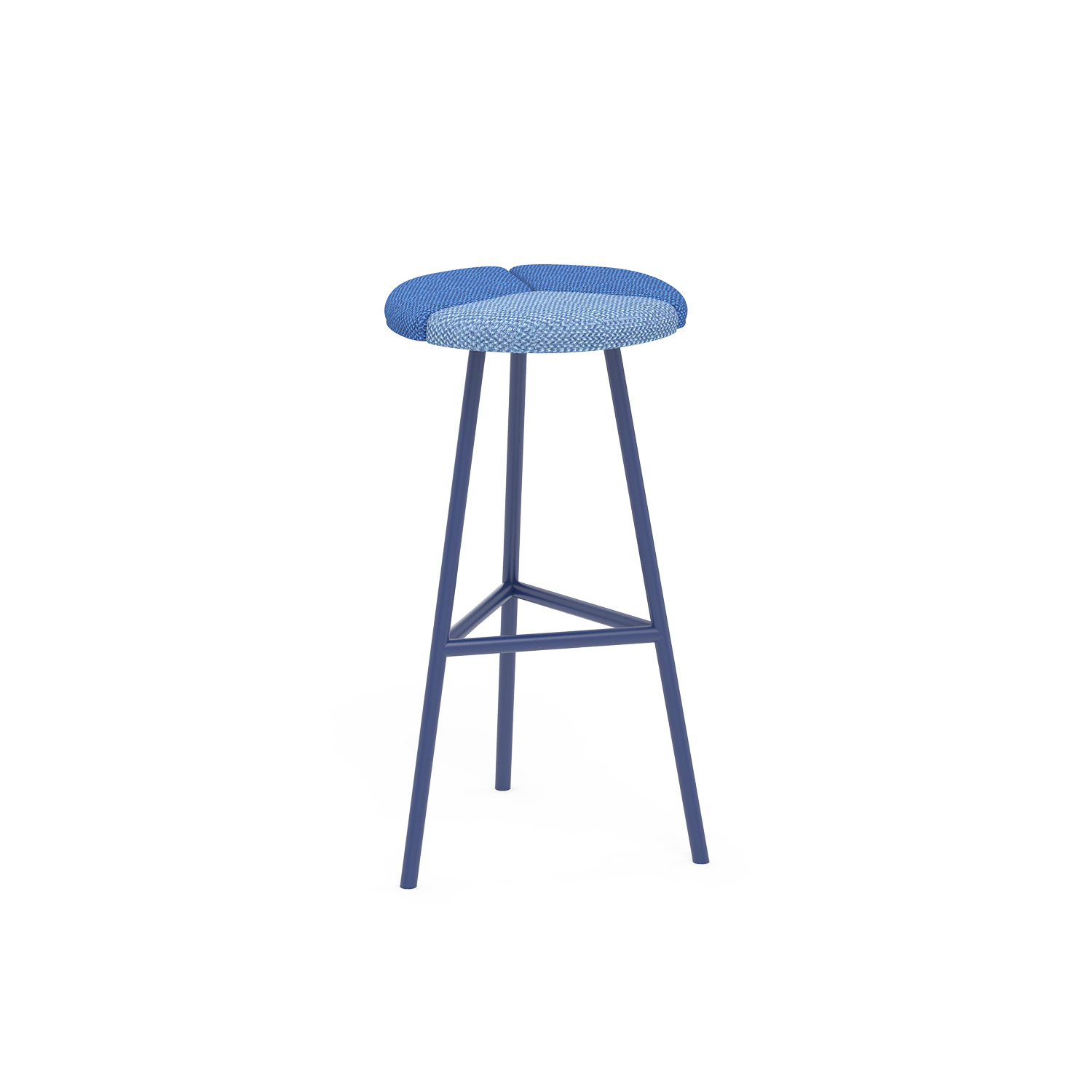 | 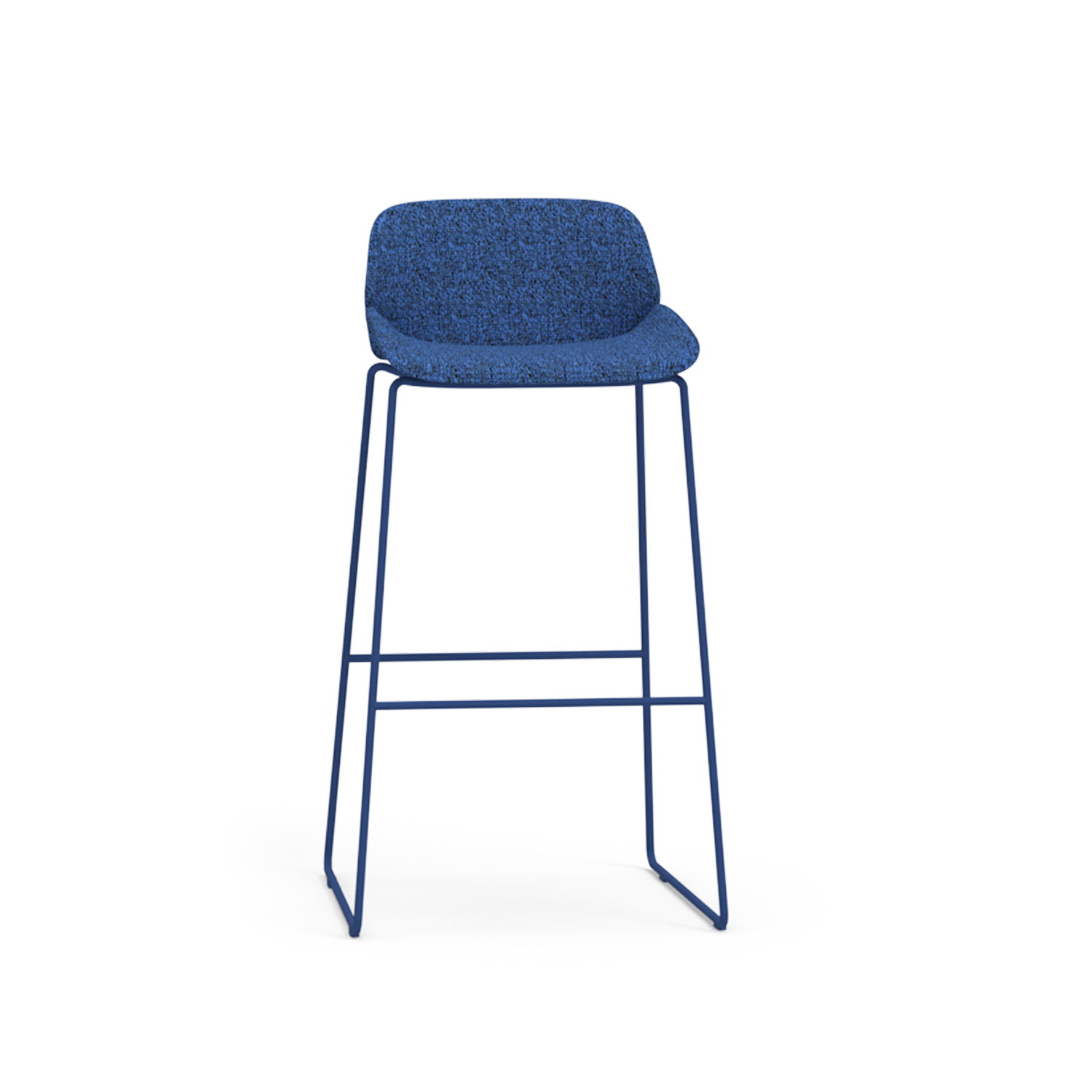 |
Run a Clean, Inspect and Replace Record
Set inspection triggers from the site condition, not an unsupported universal service life. A busy café on textured tile and a quiet pantry on finished wood can load and wear the same protector differently. Use the floor maker's cleaning method, the protector instructions and the observations below to decide the action.
Missing, split, torn, heavily compressed or detached contact face
Loose insert, cap, ring or glide; rocking or uneven floor contact
Exposed metal, hard backing, sharp edge or fastener that can reach the floor
Embedded grit, sticky residue or debris that remains after permitted cleaning
New scrape, squeak, transfer mark or repeated pad loss at the same contact
Moisture damage, swelling, corrosion or an interface condition outside the current part instructions
Copy these fields into a facilities work order or inspection sheet | ||
Log field | What to enter | Decision use |
|---|---|---|
Date and location | Inspection date plus room, counter or stool bank | Connects the condition to traffic and cleaning context |
Stool and contact ID | Exact model/variant and leg or base position | Stops a part or observation moving to the wrong stool |
Floor record | Manufacturer, product/finish and care-document revision | Controls cleaning and contact-material approval |
Observation | Clean, gritty, compressed, split, loose, missing, uneven, exposed edge, mark/noise | Provides a condition-based reason for action |
Action and source | Clean/reinspect, quarantine, approved part reference, escalation, photo/document ID | Makes the work traceable |
Reviewer and next trigger | Responsible person plus event, cleaning cycle, complaint, relocation or follow-up check | Sets local control without inventing a fixed interval |
Quarantine the stool when hard contact, looseness or instability remains; do not return it to service because a mark has been wiped away.
After an approved replacement, recheck retention, flat contact and the floor area under normal site controls.
Escalate repeated failure to the furniture and flooring reviewers; repeated detachment can signal a fit, cleaning or use condition the replacement did not solve.
Frequently Asked Questions
Can felt pads still scratch a hard floor?They can become part of the problem if grit is embedded, the felt wears through, an edge lifts, or the floor maker does not approve that contact. Keep the floor and protector clean by their instructions, and replace an approved part before hard backing or a fastener can touch the floor. Does the outside tube diameter tell me which insert fits?No. Insert fit may depend on the safely visible inside opening, profile, wall clearance, retention feature and leg angle. Record outside and inside dimensions separately, then compare them with the original furniture file and the candidate part specification. Can I add a felt pad over an existing plastic glide?Only treat that as a candidate when the floor guidance and the glide or furniture instructions allow the added layer. Stacking materials can change contact angle, edge clearance and retention, so it should not hide a loose, worn or damaged glide. How often should bar stool protectors be replaced?There is no universal interval supported by the reviewed sources. Set local triggers from use, cleaning, floor texture, complaints and post-replacement checks; replace an approved wear part when it is loose, missing, split, compressed, contaminated beyond permitted cleaning or exposing hard contact. Does this guide confirm a replacement protector for P03 or P04?No. The public pages identify the stool families and some visible or overall specifications, but they do not publish the original protector, hidden leg-end dimensions, attachment or floor compatibility. Request the current model, part and interface file before selecting a replacement. |
Confirm the Interface Before You Replace the Protector
The right protector is the one documented for both sides of the contact: the installed floor and the exact stool interface. Keep the floor care file, leg-end worksheet, candidate-part specification and service record together. If a dimension, attachment or material approval is missing, leave the decision pending.
Treat visible wear and debris as conditions to inspect, not as proof that any generic pad will solve the problem.
If counter fit or seat height is also unresolved, use the published bar stool height guide as a separate measurement task. Height guidance does not replace the foot-interface record.
Confirm the model and replacement file Take the completed records to SpaceUnited or the documented original supplier and ask for the exact model, original protector or part reference, interface drawing, and approved replacement or installation instructions before accepting a part. Leg-end measurement worksheet and clean/inspect/replace record in this guide

how tall are counter height bar stools
A stool can carry the right category label and still pin a sitter’s knees beneath a thick counter edge.The common mistake is reading the tallest number on the product page. On a backed design, that figure is usually overall height, while the dimension that controls fit runs from the finished floor t
/ Read More
how tall is bar stool height
For most setups, bar stool height means the seat should be about 28–30 inches for a 40–42 inch bar. A 34–36 inch counter usually needs a 24–26 inch seat. In either case, aim for roughly 9–12 inches between the top of the seat and the usable underside of the surface.Those ranges are a starting point,
/ Read More
what size bar stool for 42 counter
A stool can carry the right label and still feel wrong at a 42-inch surface. The common starting point is a seat near 30 inches high, which leaves about 12 inches between the seat and the top of the bar.That shortcut is not the final specification. A thick top, apron, support rail, mat, or raised fl
/ Read More