



If you want to be healthier, have more energy, and feel better, a standing desk is usually the best. SpaceUnited has choices that help you move and stay awake. Look at this simple table that shows health and work benefits:
Desk Type | Back Pain Relief | Fatigue Reduction | Positive Emotions | Comfort |
|---|---|---|---|---|
Standing Desks | High | High | High | Medium |
Office Desk Furniture | Medium | Medium | Medium | High |
You should think about how you work, what your body needs, and how your office looks. Ask yourself these questions:
Do you need to move around for creative work?
Will built-in storage help you keep things neat?
Is your office small or big?
Switching between sitting and standing helps you the most. Try to change your position every hour for the best comfort and work results.
Key Takeaways
Standing desks can help your health. They can lower back pain and give you more energy.
Changing from sitting to standing every 30 to 60 minutes helps you feel better and work more.
Height-adjustable desks let you change your workspace. This helps you sit up straight and feel less sore.
Traditional desks have lots of space to store things. They are strong and good for big jobs.
Think about your office and what you need before you pick a standing or traditional desk.
Use ergonomic tips to set up your desk the right way. Make sure your monitor and chair are at good heights.
Buy anti-fatigue mats and good shoes to make standing easier.
Look at your budget and how much space you have. This will help you pick the best desk for you.
Office Desk Furniture Comparison
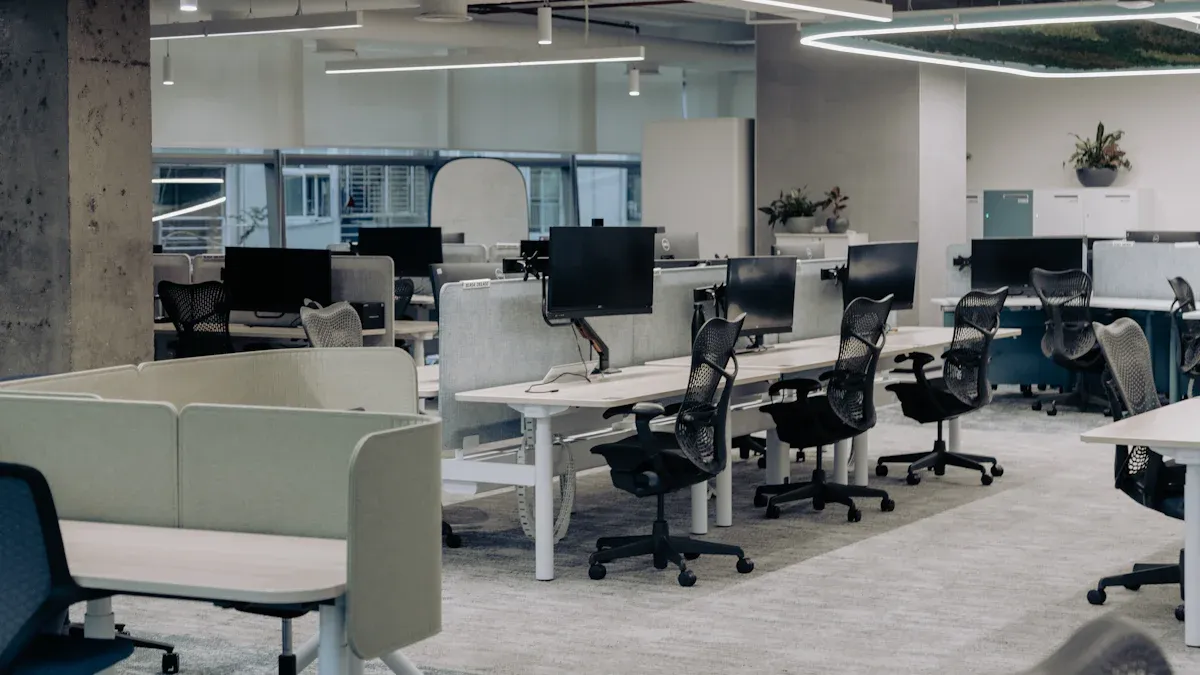
There are two main kinds of office desks. One is height-adjustable, and the other is traditional. Each type works for different people and spaces. Let’s see what makes each one special and how to choose the best for you.
Standing Desks Overview
Height Adjustment Features
Height-adjustable desks let you change how you work. You can sit or stand by pressing a button or turning a crank. This helps you feel comfortable and keeps your body from getting stiff. Many people say these desks help them move more during the day. You can set the desk at the right height for your elbows and eyes. This helps you have better posture and less back pain. Height-adjustable desks also help you avoid problems from sitting too long, like sore muscles or feeling tired. You can use these desks at work, in school, or at home.
Smart Technology Integration
Some height-adjustable desks have smart features. You might see LED screens that show the desk’s height. Some desks remember your favorite settings. Others remind you to stand up if you sit too long. These smart tools make it easy to change positions and keep your workspace healthy. Height-adjustable desks often have quiet motors, so you don’t bother others when you move the desk. You can find these desks in tech offices, call centers, and classrooms.
Traditional Desks Overview
Storage and Stability
Traditional office desk furniture gives you lots of storage. You get drawers, cabinets, and shelves for your things. These desks feel strong and steady. They are good if you use heavy computers or lots of paperwork. Here’s a quick look at what you get with traditional desks:
Characteristic | Description | Office Environment Impact |
|---|---|---|
Solid Wood Construction | Built to last and looks professional | Great for formal offices and executive spaces |
Classic Designs | Symmetrical and stylish | Makes the office feel stable and important |
Ample Storage Options | Lots of drawers and compartments | Keeps your workspace neat and organized |
Double-Pedestal Desks | Extra storage and big work surface | Perfect for managers with lots of paperwork |
Visual Hierarchy and Layout
Traditional office desk furniture shows who is in charge. Big desks with fancy wood and lots of space look important. You often see these desks in private offices or meeting rooms. The layout makes it clear who the boss is. Neutral colors and classic shapes help everyone focus and keep the office looking nice.
Tip: If you want a desk that shows you are in charge and gives you space for your things, traditional office desk furniture is a good choice.
Quick Feature Comparison
Height-adjustable desks: Good for people who want to move, stay healthy, and work in flexible spaces.
Traditional office desk furniture: Best for those who need lots of storage, stability, and a classic look.
You can find height-adjustable desks in tech offices, schools, and homes. Traditional office desk furniture fits best in executive suites, law firms, and places where you need to keep things neat and professional.
Health Benefits of Standing Desks
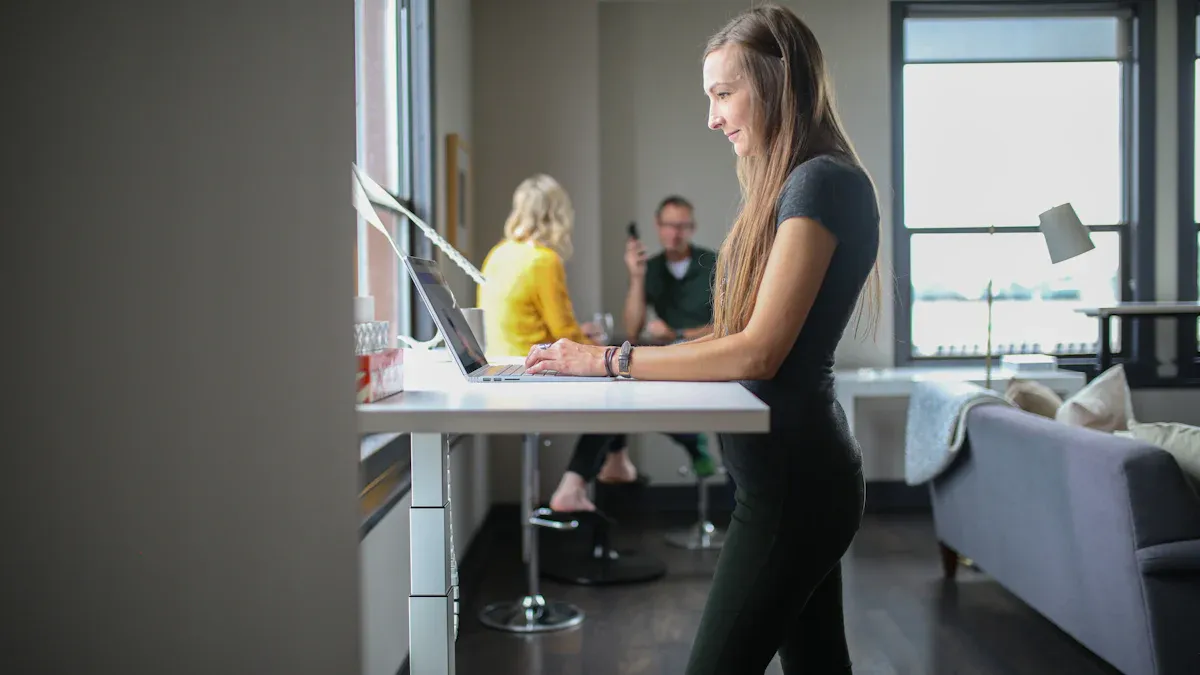
You might wonder if standing desks really make a difference for your body. The answer is yes. Many people notice fewer aches and more energy when they use a standing desk. Let’s look at how these desks help you feel better at work.
Reduced Back Pain and Improved Posture
Standing desks can help you avoid sitting-related health concerns like stiff backs and sore necks. When you stand, your body stays active. You move more, stretch, and shift your weight. This helps your muscles and joints feel better.
Check out what studies found about the health benefits of standing:
Study Source | Findings |
|---|---|
CDC and NIOSH | 54% reduction in upper back and neck pain after 4 weeks of using sit-stand desks |
Occupational and Environmental Medicine | 32% reduction in lower back pain after 3 months; 47% improvement in overall comfort ratings; reduced fatigue and increased energy levels |
Nevala and Choi | Less discomfort in upper extremities after 42 min at a standing desk; significant reduction in neck and shoulder pain after 8 weeks of use |
EF Graves, C Murphy | Significant reduction in neck and shoulder pain after 3 months of using a standing desk |
You can see that standing desks help with back pain and posture. People who use them report less discomfort and more comfort during the day.
Movement and Sedentary Reminders
You might forget to move if you sit for a long time. Some standing desks have reminders that tell you when to stand up or stretch. These features help you avoid sitting-related health concerns. You can set a timer or use a smart desk that reminds you to change positions. This keeps your body from getting stiff and tired.
Risks of Prolonged Standing
Standing desks offer many health benefits, but standing too long can also cause problems. If you stand for hours without a break, you might feel pain in your legs or feet. Some people notice swelling or tiredness in their lower body.
Here are some health effects of standing too much:
Health Risk | Description |
|---|---|
Musculoskeletal discomfort | Prolonged standing can lead to increased back pain and discomfort in lower limbs and feet, particularly when there is no option to sit. |
Progression of carotid atherosclerosis | There is a significant link between prolonged standing and the thickening of carotid artery walls, with men having existing heart conditions being particularly at risk. |
Chronic venous disease | Standing for extended periods can lead to blood pooling in the legs, resulting in symptoms like varicose veins and leg swelling. Studies indicate that standing is a greater risk factor for chronic venous disease than sitting. |
84% of people reported symptoms during a 2-hour standing task.
Almost half felt at least one symptom within 30 minutes.
Most symptoms happened in the lower back and legs.
Leg Fatigue and Varicose Veins
If you stand too long, your legs might get tired. You could also see veins in your legs become more visible or swollen. This is called varicose veins. It happens because blood pools in your legs when you don’t move enough. To avoid this, you should not stand for long periods without sitting or walking.
Best Practices for Alternating Positions
You get the most health benefits of standing when you switch between sitting and standing. Experts say you should not stay in one position for too long. Try to sit for a while, then stand, then move around.
Here are some tips to help you alternate positions:
Take breaks from sitting every 30 minutes.
Use a timer or a smart desk to remind you to stand up.
Stretch your neck, arms, chest, and back while seated.
Stand on an anti-fatigue mat to make standing more comfortable.
Wear supportive shoes and change them often.
Walk or move during your lunch break.
Make sure your desk and monitor are at the right height for both sitting and standing.
Use a supportive chair or stool when you need to rest.
Sit-Stand Desk Recommendations
A sit-stand desk gives you the power to change your position easily. You can sit when you need to focus and stand when you want to move. This helps you avoid sitting-related health concerns and the risks of standing too long. Many people find that they feel more awake and less sore when they use a sit-stand desk.
Tip: Listen to your body. If you feel tired or sore, change your position. Moving often is the key to better health at work.
By following these best practices, you can enjoy the health benefits of standing and keep your body happy all day.
Productivity and Task Suitability
Standing Desk Productivity
Energy and Engagement
You want to feel awake at work. Standing desks can help with this. When you stand, you feel more alert. You may be more interested in your tasks. Studies show standing boosts energy. It can make you feel excited about your work. You might talk to coworkers more. You could solve problems faster. Many people feel creative when they stand.
Making quick decisions is easier for some.
Teamwork gets better because you move and chat.
You need time to get used to standing, but your work improves.
Standing desks have good points, but there are limits. You need time to adjust. Standing all day is not best. Switching between sitting and standing helps you most.
Traditional Desk Productivity
Precision and Focus
Sometimes you need to sit and focus. Traditional desks are good for this. They give you a steady place to work. This is perfect for writing or coding. You can sit and pay attention to details. Many people do better work when they use a traditional desk.
You may notice these benefits:
You can work longer without feeling tired.
Your body feels supported, so you focus better.
You make fewer mistakes on tasks that need care.
But there are limits. Sitting too long can make you stiff. You might feel sleepy. You may miss the energy boost from standing.
Sit-Stand Desk Adaptability
Workflow Optimization
If you want both options, try a sit-stand desk. These desks let you sit or stand when you want. This helps you stay comfortable and productive. SpaceUnited has sit-stand desks for many office styles.
Here’s a quick look at how sit-stand desks help:
Source | Evidence |
|---|---|
Harvard Health | Sit-stand desks make moving easy. This helps you work better. |
Smithsonian Magazine | Height-adjustable desks cut sitting time. This brings health benefits and a lively workspace. |
Qualitative Study | Switching positions gives you control. This can boost your mood and work. |
Try these ideas to make your workspace better:
Make zones on your desk for different jobs.
Put your desk near a window for sunlight.
Add a mat or plant for comfort.
Use dividers if your office is noisy.
Test layouts to find what works best.
Sit-stand desks help you beat the limits of sitting and standing. You can move more and feel better. You get more done. This flexibility leads to better work and health.
Tip: Listen to your body. Change positions often. This habit can help your productivity and comfort.
Ergonomics and Comfort
Setting up your workspace the right way can make a huge difference in how you feel every day. Let’s look at how you can create an ergonomic setup for both standing desks and traditional office desks.
Standing Desk Ergonomics
Monitor and Elbow Position
When you use a standing desk, you want to keep your body in a healthy position. Place your monitor so the top of the screen is at or just below eye level. This helps you avoid neck strain. Keep your elbows at a 90-degree angle while typing. Your forearms should stay parallel to the floor, and your wrists should feel relaxed. Make sure your keyboard and mouse are close, so you don’t have to reach. Stand with your weight balanced on both feet, and keep your knees slightly bent. This posture helps you stay comfortable and reduces the risk of injury.
Here’s a quick table to guide your standing desk ergonomics:
Principle | What To Do |
|---|---|
Desk Height | Elbows at 90 degrees, forearms parallel to the floor |
Monitor Position | Top of screen at or just below eye level |
Keyboard & Mouse | Keep close, wrists straight, shoulders relaxed |
Foot Position | Balance weight, knees slightly bent |
Anti-Fatigue Accessories
Standing for long periods can make your legs tired. Try using an anti-fatigue mat under your feet. This soft mat helps reduce pressure and keeps you comfortable. You can also wear shoes with good support. Take short breaks to move or stretch. These small changes can make standing much easier.
Tip: Move around every 30 minutes. Even a quick stretch or walk helps your body feel better.
Traditional Office Desks Ergonomics
Chair Compatibility
A good chair is just as important as your desk. Choose a chair that supports your lower back and lets your feet rest flat on the floor. Adjust the seat height so your knees are at a 90-degree angle. If your feet don’t reach the floor, use a footrest. Make sure your chair fits well with your desk to avoid slouching.
Desk Height and Layout
Traditional desks often come with storage and a fixed height. Sometimes, the desk might not fit your body perfectly. You can fix this by using accessories like keyboard trays or footrests. Keep your monitor at eye level and your keyboard close. Organize your workspace so you don’t have to twist or reach too far.
Here’s a table with common challenges and solutions:
Ergonomic Challenge | How to Fix It |
|---|---|
Desk too high or low | Use adjustable chairs or keyboard trays |
No foot support | Add a footrest |
Not enough storage | Use organizers or add shelves |
SpaceUnited Ergonomic Innovations
SpaceUnited designs office furniture with your comfort in mind. Their sit-stand desks let you switch between sitting and standing, which helps your posture and energy. Modular designs allow you to set up your workspace just how you like it, whether you work alone or with a team. Many desks include quiet motors and memory settings, so you can adjust your desk with one touch and keep your favorite heights saved.
If you want a workspace that supports your health and productivity, focus on ergonomics. Small changes in your setup can make a big difference in how you feel at work.
Cost and Space Considerations
When you pick a desk for your office, you want to know how much it costs and how much space it needs. Let’s break down the prices and space needs for both standing desks and traditional office desks. This way, you can find the best fit for your budget and your room.
Standing Desk Pricing
Standing desks come in different types. You can choose manual models or electric ones. Manual standing desks use a crank to change the height. Electric standing desks move up and down with a button. The price depends on the type you pick.
Electric vs Manual Models
Here’s a quick look at what you might pay:
Desk Type | Price Range |
|---|---|
Manual crank models | $250 - $900 |
Single-motor electric | $400 - $1,200 |
Dual-motor commercial | $600 - $3,000+ |
Manual models cost less, but you have to turn a handle. Electric standing desks cost more, but you get memory presets and easy push-button use. Some electric models even help with cable management. If you want a desk that feels high-tech and easy, electric is the way to go.
Traditional Desk Pricing
Traditional desks have a wide price range. You can find simple traditional office desks for a small price, or you can buy fancy ones that cost a lot more. The price depends on the material, size, and how much storage you get.
Material and Storage Options
Price Range | Description |
|---|---|
Entry-level | $100-$300: Basic functionality with simpler materials, suitable for light use. |
Mid-range | $300-$800: Better materials and durability, offering solid options for long-term use. |
Premium | $800+: High-quality materials and superior construction, often with sophisticated designs. |
You pay more for solid wood, big sizes, and lots of drawers. Traditional desks with extra cabinets or shelves cost more. Brand and design also change the price. If you want a desk that lasts, you might spend more on traditional office desks.
Space Requirements
You need to think about how much room you have. Both standing desks and traditional office desks come in many sizes, but there are some key things to remember.
Vertical Clearance and Cable Management
Desk Type | Width (cm) | Depth (cm) |
|---|---|---|
Standing Desk | 120–160 | 70–80 |
Traditional Desk | 120–160 | 60–80 |
Standing desks need at least 50 inches of vertical space so you can raise them all the way up. You also need 36–42 inches behind the desk for your chair. Traditional office desks usually fit in the same space, but you don’t need to worry about raising them. Cable management is easier with traditional desks, but standing desks often have special trays for wires.
Tip: If you have a small office, measure your space before you buy. Desk risers can help if you want to stand but don’t have room for a full standing desk.
How to Choose the Right Desk for Your Budget and Office
If you want to save money, look at entry-level traditional desks or manual standing desks.
For more features, try electric standing desks or mid-range traditional office desks.
If you need lots of storage, traditional office desks with drawers and cabinets are best.
For a tech-friendly space, electric standing desks with memory settings are a good choice.
Desk risers are a smart pick if you want to stand but already have a traditional desk.
Traditional desks work well in offices that need lots of storage and a classic look. Traditional office desks also fit best in places where you want to show status or keep things organized. If you want to move more, standing desks or desk risers are a great way to stay healthy.
Remember, the right desk makes your workday easier and your office look great.
Choosing the Right Desk
Decision Checklist
Picking the right desk can feel tricky, but you can make it simple. Start by thinking about your health, how you work, and your office space. Here’s a handy checklist to help you decide:
Factor | Standing Desk Benefits | Traditional Desk Benefits |
|---|---|---|
Ergonomics | Adjustable height reduces physical strain | Fixed height may not suit all users |
Surface Area | Often provides ample space for multiple devices | Can vary widely, but may be limited in some models |
User Profile | Ideal for health-conscious users needing movement | Suitable for users with a preference for stability |
Stability | Requires a stable frame to avoid wobbling | Generally stable unless poorly constructed |
Health Benefits | Improves circulation and minimizes pain | May not offer ergonomic benefits |
Versatility | Allows switching between sitting and standing | Fixed use may limit flexibility |
Price Range | Available in various price points | Can range from budget to high-end options |
Health and Ergonomic Needs
You want a desk that helps you feel good all day. If you want less body pain, better blood movement, and more calories burned, a sit-stand desk or adjustable sit-stand desks are great choices. These desks let you move and stretch. You can stand when you feel stiff and sit when you need a break. If you like a steady spot and don’t want to change positions, a traditional desk works well. Remember, the right chair matters too. Don’t forget to check if your feet touch the floor and your elbows rest at a comfy angle.
Workflow and Task Suitability
Think about your daily tasks. Do you use a computer, write, or draw? If you switch between jobs or share your desk, a sit-stand desk gives you more options. You can use sit-stand converters if you want to keep your old desk but add standing time. For jobs that need focus and steady hands, like drawing or typing long reports, a traditional desk gives you a solid base. In traditional office settings, you might see more traditional desks because they look neat and help keep things organized.
Office Space and Budget
Look at your room size and how much you want to spend. Standing desks need more vertical space, so measure your area before you buy. Traditional desks come in many shapes and sizes, so you can find one for almost any room. If you want to save money, start with a basic traditional desk or a manual sit-stand desk. If you want smart features, memory settings, or lots of storage, you might spend more. Always check for cable management and storage needs.
Tip: Avoid these common mistakes:
Don’t forget about ergonomics.
Don’t sit or stand for too long without breaks.
Don’t pick style over comfort.
Don’t ignore your chair.
Don’t stand still for hours.
Don’t set your desk at the wrong height.
Don’t expect instant results from a new desk.
Don’t forget to move and stretch.
Don’t wear uncomfortable shoes.
SpaceUnited Recommendations
You want a desk that fits your role and your space. SpaceUnited offers solutions for everyone—executives, staff, and students.
Executive, Staff, and Educational Solutions
Executives: If you need a desk that shows leadership and gives you room for meetings, try the HORI series. This traditional desk looks professional and has lots of storage. If you want to stand and move, the HORI 1.5 executive sit-stand desk gives you both style and health benefits.
Staff: For busy teams, the Lifting series and VIVA series work well. These sit-stand desks help you stay active and focused. You can switch positions during the day and keep your energy up. If you need more storage, the DING series traditional desk gives you drawers and shelves.
Educational Spaces: Students grow and change. The Wenxue STUTH desk and Thinkin series have adjustable heights for kids and teens. These desks help students stay comfortable and focused. Teachers can use sit-stand desks to move around and keep the class engaged.
You can mix and match. Try adjustable sit-stand desks for flexible spaces. Use traditional desks for areas that need lots of storage or a classic look. If you want to upgrade your current setup, sit-stand converters can turn your traditional desk into a healthier workspace.
Note: The best desk is the one that fits your body, your work, and your room. Listen to your body, move often, and pick a desk that helps you feel your best.
Switching between sitting and standing at your desk can make a big difference. You may notice less neck and back pain, feel less tired after work, and even enjoy your day more. Want to get started? Try these steps:
Think about what you want your office to do.
Plan your desk layout for comfort and sunlight.
Adjust your setup for good posture.
Use the checklist above and check out SpaceUnited for smart desk ideas!
FAQ
What is the main difference between a standing desk and a traditional desk?
A standing desk lets you change its height so you can stand or sit. A traditional desk stays at one height. You get more movement with a standing desk.
How often should I switch between sitting and standing?
Try to switch every 30 to 60 minutes. You can set a timer or use a desk with reminders. This helps your body feel better and keeps you alert.
Do standing desks help with back pain?
Yes! Many people say their back pain gets better when they use a standing desk. You move more and keep your posture straight, which helps your back.
Can I use a standing desk in a small office?
You can! Just measure your space first. Standing desks need more vertical room. If you have a tight spot, try a desk riser or a compact model.
What accessories make standing desks more comfortable?
You might want an anti-fatigue mat, a monitor arm, or a cable tray. Supportive shoes help too. These items make standing easier and keep your workspace tidy.
Are standing desks more expensive than traditional desks?
Standing desks usually cost more because of their moving parts. Manual models cost less than electric ones. You can find options for most budgets.
Is it hard to get used to a standing desk?
It takes a little time. Start by standing for short periods. Add more time each week. Listen to your body and sit when you need a break.


What are the different types of modern office desks?
You can pick from executive desks, modular staff benching, collaborative tables, and special training desks. The right modern office desk helps you feel comfortable and work better. If your desk fits your work and space, you can focus more and have more ideas.
/ Read More
What is the difference between a desk and a workstation?
The main difference between a desk and a workstation is how you use your space. You use a desk when you want to work alone and focus. A workstation staff desk helps teams work together and change plans quickly. Picking the right setup can make you feel happier.
/ Read More
What is a workstation desk?
A workstation desk is more than a seat. It gives you a space to focus and feel good at work. SpaceUnited began in 2015. Now, it is a top company for modern office furniture. They mix smart design with real experience. Over time, the workstation staff desk changed how people work.
/ Read More
What materials are modern office desks made of?
You want a workspace that helps you work well and feel comfortable. SpaceUnited is a leader in making modular workspaces. They use new materials and skilled workers. Modern office desks use wood like ash, oak, cherry, and bamboo. You also find steel and metal parts, laminate, MDF, particleboard, gla
/ Read More
what are the benefits of using a modern office desk?
You want your workspace to help you focus and feel good. You also want to work in a smart way. A modern office desk gives you these things. You can change your desk to fit what you need. You will have a cleaner and neater space. Studies show ergonomic desks help you get more done.
/ Read More
How to choose the right modern office desk?
You deserve a workspace that boosts your productivity and comfort. Start by checking the size of your room and picking a modern office desk that fits well. Think about the materials—wood adds warmth and a modern feel. Look for built-in drawers or shelves to keep your supplies tidy.
/ Read More