


By Ergonomics & Workspace Design Specialists | Updated September 2026 | Reading Time: 8 min
Most people replace a leather executive chair not because it breaks down, but because it breaks their back.
Within three months, an ill-fitting "luxury" chair can inflict severe physical strain. For corporate leaders and high-performance professionals seated 6 to 10 hours a day, an improper chair creates a vicious cycle of chronic lumbar pain, neck stiffness, and persistent afternoon fatigue. These issues do not manifest on day one; they quietly compound over weeks until your posture collapses.
The fundamental problem is never the "leather" or the "executive" designation. The real flaw is that most commercially sold executive chairs allocate 90% of their production budget to visual status symbols—overstuffed padding, oversized backrests, and glossy chrome accents—while almost completely neglecting the actual human seated inside: where their lumbar spine rests, what their vertebral discs need, and whether femoral blood circulation is compromised.
I. What Does an "Executive Chair" Truly Mean?
The label "executive chair" has been diluted across the industry. Everything from $100 mass-market e-commerce models to $5,000 bespoke European imports shares the same moniker.
A genuine, professional-grade leather executive chair must simultaneously deliver across three non-negotiable dimensions:
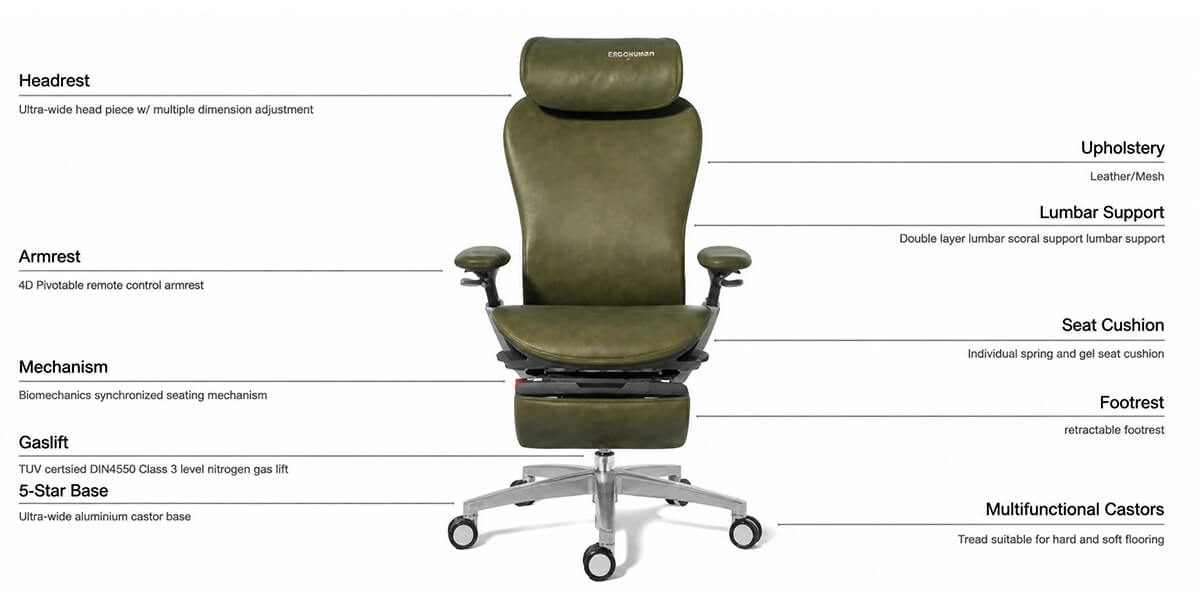
1. Architectural Profile & Full-Spine Silhouette: The backrest must be tall enough to support the entire spinal column—including both the thoracic and lumbar segments—not just the lower back. The headrest must cradle the occipital bone at the base of the skull rather than hovering uselessly above the shoulder blades. In boardrooms or client-facing executive suites, the chair must project commanding authority without appearing gaudy.
2. Structural Integrity & Premium Metallurgy: The upholstery represents only half of the material equation. Equally critical: Is the internal frame engineered from robotically welded steel or die-cast aluminum alloy? Does it feature an aluminum 5-star base? Does the gas cylinder meet Class 4 (or at minimum Class 3) safety standards? Does the tilt mechanism possess a heavy-duty metal core? Inferior manufacturing always lurks beneath the surface.
3. Dynamic Ergonomic Adjustability: An executive chair without substantive adjustability is merely an ornamental throne—it looks grand, but cannot support half a workday. Essential adjustments include seat height, seat depth, lumbar depth/height, 3D/4D armrests, and multi-angle recline with tension lock.
The SpaceUnited Ergonomic Leather Executive Chair is engineered specifically to bridge this gap. By uniting timeless executive aesthetics with multi-dimensional backrest, seat pan, and armrest adjustability, it delivers tailored spinal support that actively relieves vertebral pressure during prolonged desk work.
II. Leather Grades Demystified: Full-Grain, Top-Grain, and Premium PU
Upholstery grading is where buyers are most routinely misled by deceptive marketing jargon. Understanding these three material tiers helps you avoid costly purchasing mistakes.
Full-Grain Leather (The Pinnacle Grade)
Full-grain is the highest quality leather obtainable. It retains the complete outer fiber structure of the hide without buffing, sanding, or surface alteration. It possesses exceptional natural breathability and develops a rich, distinguished patina over years of use. With proper semi-annual conditioning, a full-grain leather chair easily endures for 10 to 15+ years. The trade-off: It requires conditioning 2 to 4 times a year and should be shielded from intense direct sunlight and radiators.
Top-Grain Leather (The Commercial Gold Standard)
The second highest grade. The very outer layer is lightly buffed to eliminate natural hide imperfections, yielding a more uniform texture and enhanced stain resistance. While buffing slightly diminishes outermost tensile strength compared to full-grain, the difference is negligible in climate-controlled executive offices. Top-grain represents the ideal sweet spot between luxury, uniformity, and durability.
Premium Engineered PU Leather (The Modern Pragmatic Choice)
High-grade polyurethane (PU) formulations have advanced dramatically, offering robust crack resistance, stain repellence, and wipe-clean maintenance. Its primary limitation remains thermal breathability—standard synthetic leather traps body heat during 6+ hour continuous sessions. Leading models overcome this through perforated PU engineering, making it a highly practical, low-maintenance option.
III. The Biomechanical Cost of the Wrong Chair
Most professionals experience a delayed awareness of postural trauma—they only realize their chair is defective when chronic neck stiffness, persistent lumbar pain, or afternoon leg numbness becomes unbearable. Biomechanical deterioration, however, begins on day one.
Here is how a "visually plush but ergonomically bankrupt" executive chair damages your anatomy:
• Lumbar Vertebrae: If lumbar support is fixed and pushes against the sacrum rather than the natural lordotic curve (L1–L5), the spine is forced into kyphotic flexion. Intervertebral disc pressure spikes dramatically. Within weeks, you experience persistent dull lower-back ache—often mistaken for "working too long" when it is actually structural misalignment.
• Cervical Spine: A low-positioned headrest that stops around the upper scapula provides zero support for users 5'9" (175 cm) or taller. Deep cervical flexors and the trapezius must contract continuously to hold the head upright, creating chronic upper-back strain and tension headaches during demanding workweeks.
• Lower Limb Circulation: When seat depth is uncalibrated, the hard front edge of the seat pan compresses the popliteal fossa behind the knees, restricting venous blood return. That familiar restless sensation—the urge to stand up because your legs feel heavy or numb—is caused by femoral circulatory restriction.
The SpaceUnited Ergonomic Leather Executive Chair actively eliminates these three anatomical failure points through precise geometric adjustability and waterfall seat contours, rather than masking them with thick, unsupportive foam.

IV. The Recline Mechanism: The Most Overlooked Ergonomic Engine
While marketing brochures fixate on leather softness, the recline and tilt mechanism is the true engine of posture preservation. On specification sheets, it is frequently reduced to a single cryptic line.
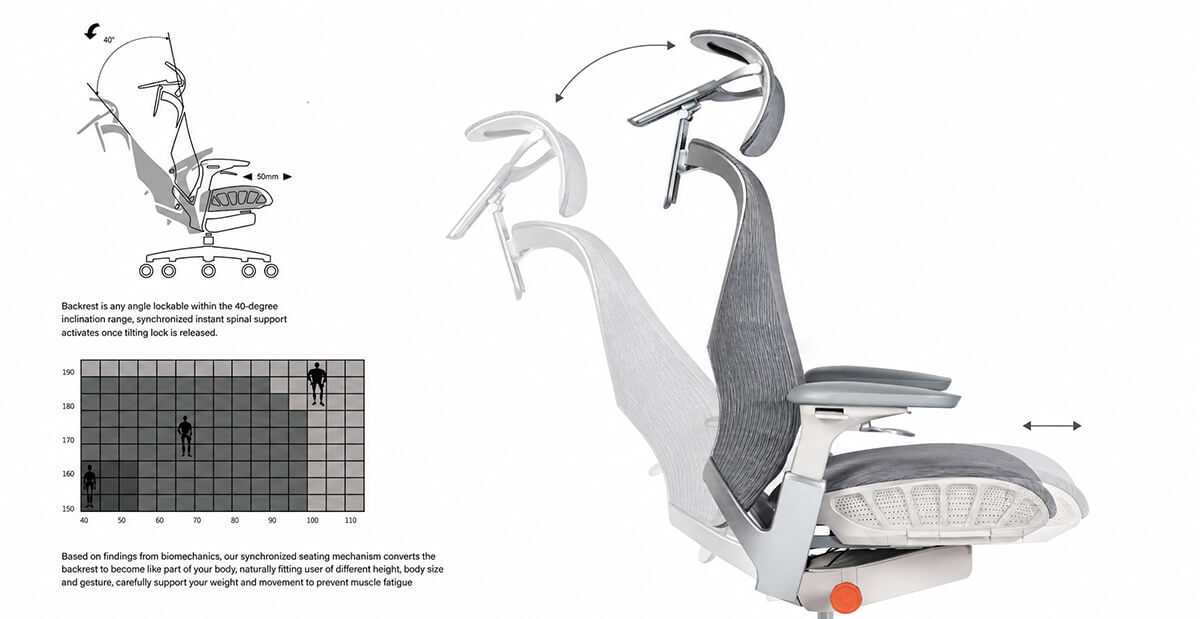
Why Dynamic Tilt is Critical: Maintaining the spine's natural S-curve requires a neutral pelvic tilt—neither excessive anterior pelvic tilt (hyperlordosis) nor posterior pelvic rotation (slouching). Fixed seats force hip angles under 90°, flattening the lumbar curve. After 2–3 hours, the posterior spinal ligaments endure severe tensile strain, triggering that notorious 3:00 PM fatigue.
Three Recline Mechanisms and When to Choose Them:
• Forward Tilt: The seat pan pitches forward by 3°–5°, opening the hip angle and rotating the pelvis forward. Essential for intense keyboard tasks, document review, and data analysis where users lean forward into their work.
• Recline with Multi-Angle Tilt Lock: Enables smooth reclining from 100° to 120°–135°, offloading spinal disc pressure during phone calls, strategic reading, or contemplation. A solid lock mechanism is vital—without it, muscles stay engaged just to prevent snapping back.
• Synchronized Tilt (Synchro-Tilt 2:1): The backrest and seat pan articulate harmoniously at a 2:1 ratio—for every 2° the backrest reclines, the seat tilts back 1°. This maintains constant lumbar alignment without lifting the thighs or causing shirts to pull untucked. Synchro-tilt should be considered the mandatory baseline for any modern executive chair.
Featuring a heavy-duty synchronized tilt chassis, the SpaceUnited Ergonomic Leather Executive Chair adapts seamlessly to your micro-movements throughout the workday.
V. Leather Executive Chair vs. Ergonomic Mesh Task Chair: An Honest Comparison
This dilemma surfaces in virtually every procurement meeting. Here is an objective, balanced appraisal:
High-end mesh task chairs inherently excel in thermal breathability, lighter weight, and universal mass deployment across large cubicle farms. That is why they dominate enterprise procurement.
However, a premium leather executive chair provides irreplaceable strategic value:
• Visual Authority & Executive Presence: The architectural silhouette and refined leather upholstery convey gravitas and organizational leadership that mesh simply cannot replicate. In boardrooms, client negotiation spaces, and C-suite offices, aesthetics directly communicate corporate stature.
• Adaptive Tactile Ergonomics: High-grade leather gently molds to the user's contours over months of use, creating a personalized cradle without the sag or edge-frame friction common to older mesh chairs.
• Superior Longevity in Climate-Controlled Environments: When maintained in air-conditioned executive suites with periodic conditioning, full-grain leather outlives most synthetic task fabrics by years.
The Verdict: For back-office clerical workstations, a mesh task chair offers high ROI. For high-visibility executive spaces where you host clients and conduct leadership operations, a true ergonomic leather chair is a justified long-term investment in health and stature.
VI. Leather Chair Care & Maintenance Protocol
Maintaining genuine leather requires modest yet disciplined care. Follow this professional maintenance schedule:
Task | Frequency | Procedure & Precautions |
Dusting | Weekly | Wipe down with dry microfiber cloth or vacuum with soft brush attachment; prevent abrasive particles from embedding in seams. |
Spill & Spot Cleaning | Immediate | Blot gently with clean damp cloth (never scrub). For stubborn spills, apply pH-neutral leather cleaner. |
Deep Cleansing | Quarterly | Apply specialized leather cleanser with a foam applicator; always test on an inconspicuous underside area first. |
Conditioning | 2–4 Times / Year | Buff in premium leather cream/balm to restore essential oils. Increase frequency in arid climates or heated rooms. |
UV & Thermal Defense | Ongoing | Position chair at least 3 feet away from HVAC vents, radiators, and unshaded south-facing windows to avoid drying. |
Note on PU Leather: Simply wipe with a clean damp microfiber cloth. No conditioning creams are required. While PU is far more forgiving of maintenance lapses, it will not develop the timeless organic patina of natural grain.
VII. The Six-Step Executive Chair Buying Framework
·Step One: Calculate Your Target Seat Dimensions: Measure your popliteal height (distance from the floor to the crease behind your knee while barefoot). That is your baseline seat height. Rule of thumb: Standing Height (cm) × 0.25 ≈ Target Seat Height (cm). Also measure biacromial shoulder width and thigh length to ensure armrest spacing and seat pan depth match your anatomy.
·Step Two: Prioritize Ergonomic Range Over Aesthetics: Verify all five core adjustments—seat height (38–53 cm), seat depth (at least 5 cm adjustment), lumbar position, 3D/4D armrests, and synchro-tilt lock—before assessing upholstery. A gorgeous chair that fails to support your anatomy is an expensive liability.
·Step Three: Match Leather Tier to Office Climate: Climate-controlled suite + dedication to bi-annual care = Choose Full-Grain or Top-Grain. Higher ambient temperatures + zero maintenance tolerance = Choose Perforated Premium PU. Strictly eliminate Bonded Leather from any executive environment.
·Step Four: Insist on a 15–20% Weight Capacity Buffer: If you weigh 85 kg (187 lbs), select a chair engineered for at least 105–115 kg (230–250 lbs). Operating comfortably below maximum stress thresholds prevents premature foam compression and gas lift degradation.
·Step Five: Harmonize with Room Scale and Architecture: High-back executive chairs in compact home offices appear visually oppressive, while mid-back chairs in cavernous boardrooms look insignificant. Coordinate leather tones with desk finishes: rich espresso leather complements walnut, while modern black or light cream pairs striking contrast with glass or sintered stone.
Frequently Asked Questions (FAQ)
Q1: How long does a high-quality leather executive chair last?
A certified chair built with a reinforced metal frame, full-grain or top-grain leather, and a Class 4 gas cylinder typically provides 8 to 15 years of dependable daily service under routine care. The earliest component to experience wear is typically lower-density seat foam, followed by the tilt lock mechanism in high-recline users. Bonded leather, by contrast, frequently delaminates within 2 to 4 years regardless of frame quality.
Q2: Is genuine leather worth the premium over high-grade PU?
In air-conditioned offices with bi-annual conditioning, absolutely yes. Genuine top-grain and full-grain leather offer superior micro-climate breathability, organic molding to your contours, and prestigious visual patina. However, for warm rooms or low-maintenance preferences, premium perforated PU provides an exceptionally durable, cost-effective alternative lasting 5+ years with simple damp-cloth cleaning.
Q3: How do I determine the ideal seat height for my desk setup?
Use the formula: Standing Height (cm) × 0.25 ≈ Target Seat Height (cm). Ensure your chair's adjustment cylinder covers 3–4 cm above and below this baseline. When properly seated: feet rest flat on the floor, knees form an uncompressed 90-degree angle, and thighs remain parallel to the ground with 2–3 finger-widths clearance behind the knees.
Q4: Can a leather executive chair genuinely improve sitting posture?
Yes—provided it has calibrated adjustability. A chair with active lumbar support, adjustable seat depth, and neutral armrest height dismantles compensatory postural habits (forward head posture, rounded shoulders, posterior pelvic rotation). Posture improves through ergonomic geometry and active mechanical alignment, not merely the upholstery material itself.
Q5: What is the most catastrophic mistake when buying an executive chair?
Prioritizing showroom aesthetics over biomechanical adjustability. A chair that feels "cushiony" during a two-minute sit test will expose painful lumbar and cervical flaws during a 9-hour workday. The chairs that provide enduring professional satisfaction always fit the human body first, allowing aesthetic elegance to serve functional support—never the reverse.
Medical & Ergonomic Disclaimer: This article is provided for educational and informational purposes only and does not constitute formal medical or ergonomic advice. Individuals with pre-existing musculoskeletal disorders or persistent spinal pain should consult a licensed healthcare professional or certified ergonomist before implementing significant workstation modifications.


Office Chairs Without Wheels: When Fixed Bases Make Sense
An office chair without wheels makes sense when the person does not need to roll toward a desk, storage or nearby equipment. It can suit a visitor seat or a meeting position that stays in one place. The seat still needs to fit the person and the work surface.
/ Read More
High-Back vs Mid-Back Office Chairs: Fit and Features
Choose a high-back chair when its extra surface gives you upper-back contact you want. Choose a mid-back chair when its shorter back already meets your needs and leaves your preferred shoulder movement clear. Neither label tells you whether the seat, lumbar support or headrest fits.
/ Read More
How to Choose an Office Chair: A Buying Guide Centered on Employee Spinal Health
2023 China Home Furnishing Expo: Invitation to Global PartnersAs a bridge connecting the global home furnishing industry and a benchmark platform for showcasing cutting-edge products and innovative designs, the 51st China International Furniture Fair (Guangzhou) kicked off grandly in 2023. It gather
/ Read More
Office Chair vs Gaming Chair: Adjustments, Fit and Long-Session Use
One chair may need to handle focused work, video calls, mouse-and-keyboard play, controller sessions, and relaxed viewing. A shelf label cannot tell you whether its seat, controls, or support will fit those tasks.For an office chair vs gaming chair decision, start with the exact models.
/ Read More
Task Chair vs Office Chair: What the Labels Actually Tell You
The short answer is that neither name tells a volume buyer enough. An office chair is a broad market category, while a task chair is usually presented as a chair for desk work. Sellers use the terms differently, so the label does not prove a control set, grade, fit, or expected service life.For a fi
/ Read More
Mesh vs Leather Office Chairs: Heat, Support, Cleaning & Cost
If your chair feels too warm, start by testing an open mesh construction. If you prefer a cushioned seat and a covered back, include a leather or synthetic-covered option in the trial. Neither choice guarantees better support or a longer life.For an office buyer, the mesh vs leather office chair dec
/ Read More
How to Clean an Office Chair: Mesh, Fabric, Leather & Plastic
Start with the chair's care instructions, not a bottle of cleaner. Identify each surface, remove loose dirt with a permitted dry method, and treat remaining marks only with an approved product. Keep liquid out of mechanisms and leave the chair out of use until the cleaned areas are dry.
/ Read More
Office Chair Dimensions: Seat Width, Depth, Height & Desk Fit
Before ordering an office chair, check two things separately: whether the seat and arms fit the user, and whether the complete chair can reach the desk. Office chair dimensions such as overall width and total height cannot answer both questions.Start with named measurement points, then record the ad
/ Read More