


If your chair feels too warm, start by testing an open mesh construction. If you prefer a cushioned seat and a covered back, include a leather or synthetic-covered option in the trial. Neither choice guarantees better support or a longer life.
For an office buyer, the mesh vs leather office chair decision needs more detail than a material label. Compare the seat and back separately, check the adjustments, and ask facilities staff about care. The comparison below includes a blank trial record and the cost questions to settle before ordering.
Compare the seat and back, not just the label
A mesh back does not tell you what supports your thighs. Start with two separate descriptions: the backrest construction and the seat construction. Then identify the covering on each part.
Construction | What to verify | What it means for your comparison |
|---|---|---|
Suspended mesh seat and back | Textile stretched over a frame in both areas; confirm any pads or added layers. | Evaluate the seat's tension and frame contact as well as the back. |
Mesh back with a padded seat | Open back, plus a separate cushion and its own cover. | Back airflow does not establish how warm the seat will feel. |
Leather-covered chair | Which panels use leather, the specified grade and finish, and the padding beneath. | Compare the cushion and adjustments separately from the leather. |
PU or another synthetic cover | The named coating, backing and covered panels; PU means polyurethane. | Do not treat a leather-like appearance as proof of genuine leather. |
Leather describes a covering, while mesh can also form the supporting surface. That is why a simple two-column comfort ranking can mislead. Ask the supplier for separate seat and back material descriptions, not just a finish name. If an offer says genuine leather, request the grade, finish and panel coverage in writing; the phrase alone does not resolve those details.
When does mesh make sense for a warm office?
Open suspension is worth testing when trapped warmth is your main complaint. It provides a different air path from a covered cushion, but the result depends on the actual chair, your clothing and the room.
For one specific example, Herman Miller's Aeron brochure says its 8Z Pellicle material lets air, body heat and water vapor pass through the seat and back. That is a manufacturer description of its own construction, not a measured cooling advantage for every mesh chair.
Choose what to trial first
Warm room or frequent seat warmth: include an open-seat candidate, then record seat warmth separately from back warmth.
Preference for cushioning: include a mesh-back padded-seat option alongside a covered chair. Compare the cushions, not only the backs.
Cool room or dislike of an exposed feel: include a covered-back option, while still checking fit and warmth during normal work.
A leather or PU label does not tell you the whole thermal story either. Padding, surface finish and contact area remain part of the comparison. Keep a jacket or added cushion consistent between trials, and note direct sun or an air vent. Those changes can make a showroom impression hard to repeat at the desk.
Check support independently of the covering
A soft first impression is not the same as useful support. CCOHS chair-selection guidance ties ergonomic suitability to the worker's size, workstation and tasks. Check both candidates at the desk where they will be used.
Seat fit: can you use the backrest without the front edge pressing behind your knees?
Back contact: does the support meet your lower back without an unwanted pressure point?
Arm position: can your arms rest comfortably without the armrests blocking access to the desk?
Controls: can you reach and use the adjustments needed for your work?
Surface contact: note any seat-frame edge or cushion area that feels intrusive during the task.
Record the location and setting behind each comment: “front edge noticeable while typing” is more useful than “mesh uncomfortable.” Likewise, “arms block desk access” identifies a configuration problem that changing the upholstery may not solve. Ask for the exact control list and verify it on the sample, even if two chairs look similar. A material preference should help distinguish chairs that fit, not excuse a fit problem.
Compare maintenance before choosing a finish
Compare what the cleaning team must reach and which products the finish permits. An open weave, a cushion seam and a smooth covered panel present different access points. Smooth appearance alone does not establish stain resistance or compatibility with your office's cleaner.
Mesh: inspect where dust or crumbs could collect, including the frame edge and the area beneath the seat.
Padded seat: ask how the cushion and its cover are maintained; a mesh back does not answer this.
Leather: obtain instructions for the specified finish, including whether any conditioner is approved.
Synthetic cover: request its own care sheet; do not substitute instructions intended for genuine leather.
All candidates: confirm approved cleaning products, any drying downtime, inspection needs and whether damaged seat or back parts can be replaced.
Do not add conditioner by default: Herman Miller's leather care instructions prohibit oils and furniture polish on the leather they cover. That is not a SpaceUnited care instruction, so ask facilities staff to approve the actual supplier's care sheet. For wear, record visible changes and seek the supplier's inspection criteria. Neither a stretched-looking mesh panel nor a creased cover provides a reliable prediction of the chair's remaining life.
Use a matched chair trial before ordering
CCOHS recommends letting intended users try suitable chairs in a real work situation. Use the following record to turn that trial into a purchasing decision. It is a blank buyer tool, not a test performed for this article.
Identify candidate A and B by exact model and configuration. Note which sample has each cover, cushion, arm and support option.
Keep the user, desk, shoes and work task consistent. Record room conditions and clothing so a change is visible in the notes.
Give each candidate a comparable work period with normal breaks. Record the duration rather than treating a fixed number of minutes as a comfort test.
Write separate observations for seat warmth, back warmth, pressure and control access. Let each participating employee complete their own record.
Record | Candidate A | Candidate B |
|---|---|---|
Exact model and options | To record | To record |
Task, duration, room and clothing | To record | To record |
Seat warmth / back warmth | To record separately | To record separately |
Pressure location and chair setting | To record | To record |
Controls and desk access | To record | To record |
Acceptable for this user's task? Why? | To record | To record |
Unanswered specification or care question | To record | To record |
Agree on essential requirements before reviewing the notes. A chair that fails a necessary fit or care requirement should not win because it looks better or costs less. If responses differ between staff members, record that difference; do not turn one person's preference into an office-wide verdict. Repeat a comparison if the conditions changed enough to explain the result.
Compare complete quotes, then confirm the model
There is no useful material-only price winner without comparable offers. Put the same required features, order quantity and delivery scope on both quote requests. Compare costs over the same planning period, without assuming either chair lasts a fixed number of years.
Purchase: exact configuration, quantity, freight, taxes and any assembly charge.
Routine care: approved supplies, staff time and any time the chair must be out of use.
Repairs: availability and quoted cost of replacement seat, back or other service parts, including labor and shipping.
Warranty: covered components, exclusions, claim process and responsibility for costs.
Disruption: how the office would cover an unavailable chair while a repair or replacement is arranged.
Keep unknown costs visible. If repair availability is unconfirmed, compare a repair scenario and a replacement scenario as assumptions, not forecasts. A warranty period is not a promise of service life. No current prices or lifetime estimates are used in this comparison.
Use product pages to identify questions, then get written answers
Match the quote, sample and material sheet to the same model suffix. Confirm seat and back coverings, installed adjustments, care instructions and the whole-chair user limit. Product photos can show a configuration to discuss, but cannot authenticate those specifications.
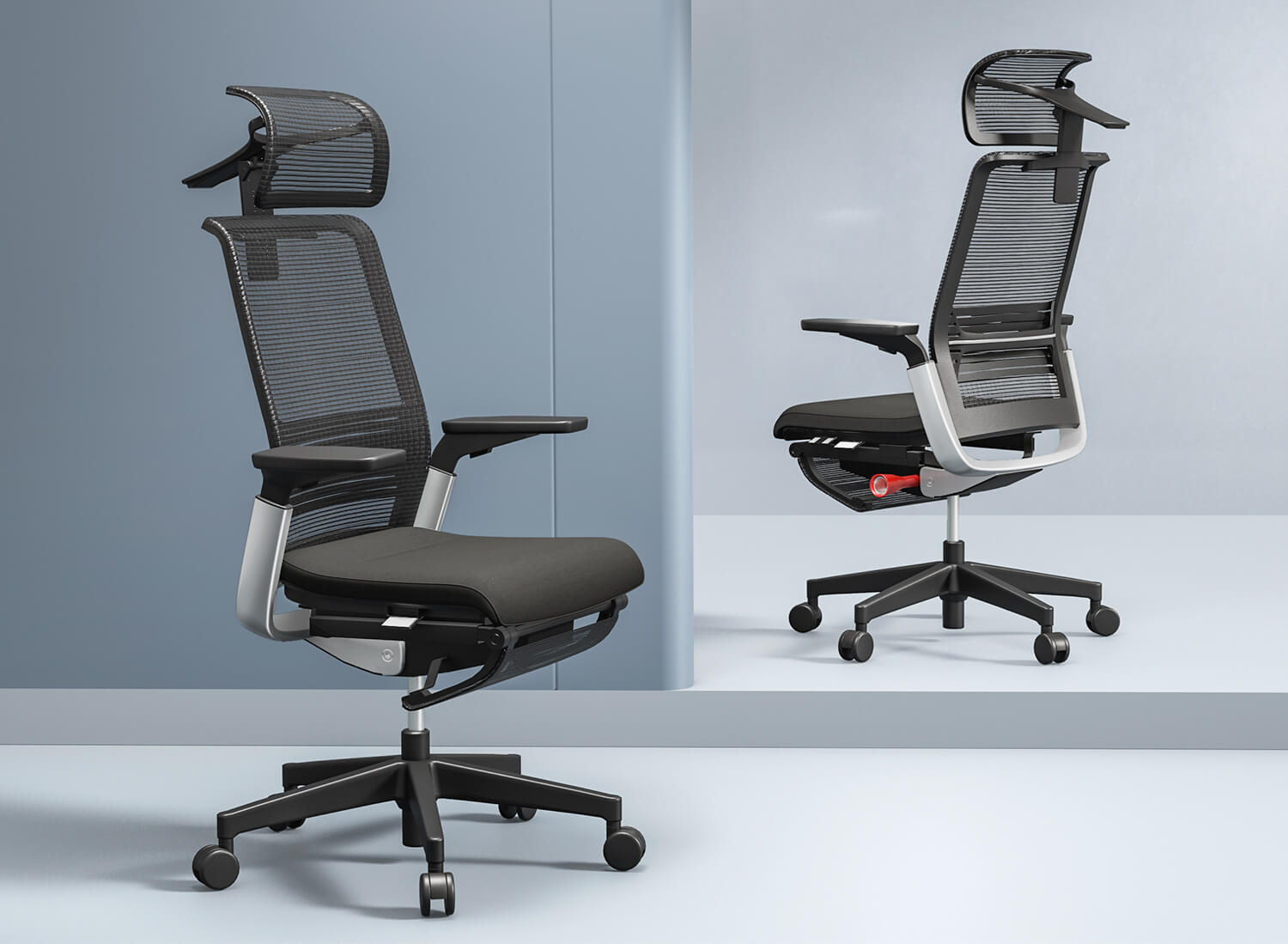
SpaceUnited's mesh chair product page lists several SU-ST-MH variants. Its copy uses both flip-up and 4D armrest descriptions, so those labels do not establish the arms on your chosen model. The image below is from that page; it does not verify the photographed chair's exact model suffix or covering composition.

Source-page image: an open back and a padded seat are visually distinct. Confirm the exact model and materials in the order documents.
SpaceUnited's executive leather chair product page lists SU-ST-MH-6 and SU-ST-MH-11 and describes genuine leather. Treat that as the brand's statement, not verification of leather grade or every panel's material. Request the material and option list for the quoted model. The page's base-strength claim is not a whole-chair user-weight rating.

Source-page image: the covered appearance does not establish leather grade, material coverage or user capacity.
Questions to settle before purchase
Can a chair combine mesh and leather?
Yes. The back and seat can use different coverings or constructions, so a mixed-material chair belongs in the comparison. Record each area separately instead of forcing it into one material category.
What if I cannot try the chair before buying?
Ask for the exact specification, care instructions and any applicable return terms in writing. A photograph or a material label cannot replace a fit trial; record the untested fit as a purchase risk rather than assuming it will work.
Should every employee receive the same upholstery?
A consistent appearance can be a purchasing preference, but it should not override a documented fit or task requirement. Review each user's trial notes before deciding whether a single configuration meets the team's needs.
What if the sample and quote describe different options?
Do not treat the sample's result as approval of the quoted chair. Ask the supplier to reconcile the model suffix, coverings and installed controls before placing the order; if the configuration changes, reconsider the relevant trial checks.
Make the choice on fit and documented requirements
Use the material choice to narrow your trial, then let fit, local warmth, approved care and complete costs decide the order. Keep unresolved configuration questions separate from user preferences. If an essential requirement remains unconfirmed, pause that candidate's approval.
Use the SpaceUnited seating inquiry page to send the exact candidate references, quantity and trial notes.
Confirm your shortlist with SpaceUnited. Ask for written material, configuration and care confirmation before committing to an order.

What are the ergonomic considerations for an office chair?
An office chair should have many ergonomic features. These features help people stay comfortable and healthy at work. You should look for adjustability, lumbar support, seat height, armrests, tilt, good material, and a strong base. These things stop pain, help you focus, and keep your posture good.
/ Read More
How to properly adjust an office chair for optimal comfort?
Many people sit at desks and ask why their backs hurt or shoulders feel tight. An office chair that fits well can help a lot. Changing things like lumbar support, seat depth, and armrests lowers strain. It keeps your body relaxed and helps you sit in a healthy way. SpaceUnited makes ergonomic office
/ Read More
What are the benefits of using an office chair?
An office chair has many good things for people who sit a lot. People feel less pain and have more energy with a work chair. Regular chairs do not move and do not give much support. Ergonomic chairs help your body feel good and stay healthy. Many workers can focus better and hurt less with ergonomic
/ Read More
What are the different types of office chairs?
When you walk into a modern office, you will see many types of chairs. There are swivel, ergonomic, modern, visitor, leather, and mesh chairs. Each type gives something special to your workspace. SpaceUnited offers new ideas for all these office chairs. This helps you find the chair that fits your n
/ Read More
What are the best office chairs?
When people talk about the best office chairs, the Steelcase Gesture is often first. Testers say it is very comfortable. It fits many body types because you can adjust it a lot. It gives good support. The Herman Miller Aeron is known for being strong and letting air flow through. This is great if yo
/ Read More
What are the Different Types of Office Chairs?
What are the Different Types of Office Chairs?Sitting in a busy office, struggling with daily tasks, and the glow of computer screens is already a norm for you. But sitting on the wrong chair? That shouldn’t be. Office chairs are the most important tools needed in an office as they shape your comfor
/ Read More