


Choose a cushion by the job it must do, not by the softest first impression. A foam-based seat is a practical starting point when an office needs a tidy profile and limited routine reshaping. Loose feather or fiber creates a softer, more relaxed result, while a layered cushion can pair a supporting core with a softer surface.
Those are tendencies, not guarantees. The cover, cushion thickness, layer order, seat suspension, and back construction all change what a person feels. A one-word label such as “foam” or “down” cannot tell procurement what is inside each part.
A useful sofa cushion filling comparison should leave you with two outputs: a model-specific seat-and-back fill schedule and a sample record that every supplier completes under the same conditions. This guide gives you both, including a safe way to handle conflicting product copy without guessing.
Read the cushion from the outside in
Direct answerAsk for separate seat and back schedules. A complete schedule names each layer from the cover inward and records the support below the seat as a separate component. |
Item | Description |
|---|---|
Cover and ticking | The visible upholstery and the inner casing that contains or protects the cushion materials. |
Surface wrap | An optional softer layer of fiber or a feather/down blend around a core. |
Core or loose-fill chamber | The main cushion body: a foam core, loose fiber, feather/down blend, or another documented construction. |
Suspension below | Webbing, serpentine springs, or another platform under the seat cushion. It changes the sitting result but is not cushion filling. |
Read this as a procurement cross-section, not as a fixed recipe. A seat usually carries more load and therefore needs enough deep support for the intended user and dwell time. A back cushion can prioritize contour and surface softness, but it still needs a defined fill weight or layer schedule if consistent appearance matters. Attached backs and loose backs also behave differently.
Seat and back specification split | |||
Component | Primary job | Record before approval | Do not infer |
|---|---|---|---|
Seat cushion | Carry load and control sink | Core material, wrap, thickness, density/firmness fields when applicable, ticking, removability | Seat feel from fill name alone |
Back cushion | Shape back support and surface comfort | Loose or fixed construction, material blend, fill weight or layer schedule, attachment | Same construction as the seat |
Seat platform | Support the cushion below | Webbing/spring/platform type and sample match | That a frame graphic proves the cushion fill |
Compare sofa cushion filling options by construction
Procurement comparison: tendencies to verify on the exact sample | ||||
Construction | What it often brings to a sample | Upkeep tendency | Consider it when | Confirm before approval |
|---|---|---|---|---|
Foam core | Defined shape and a more consistent pushback, depending on formulation, thickness, and firmness | Usually less reshaping than loose fill | A tailored seat and predictable setup matter | Foam type, density with units, IFD or firmness method, thickness, layer count, model/revision |
Loose polyester fiber | Soft contour and a relaxed profile; distribution can change with use | Regular redistribution may be needed | A softer back or casual appearance is acceptable | Fiber type, fill weight, chambering, seat versus back use, care steps |
Feather/down blend | Moldable surface and pronounced sink; blend and casing strongly affect the result | Plumping and redistribution are part of ownership | Softness is valued and the team accepts the care routine | Species/material declaration, blend ratio, fill weight, chambering, ticking, care plan |
Foam core with fiber or feather wrap | Core support with a softer surface and rounder edge | Less loose-fill movement than a fully loose seat, but the wrap still needs review | Procurement wants a middle path | Core fields plus wrap material, wrap weight/thickness, layer order, closure, replaceability |
Use the table to create a shortlist, then judge the complete sample. A thick soft foam can feel different from a thin firm foam. A feather-rich wrap can change the surface without carrying the deep load. Cover tension and the support below the cushion can also make two inserts with similar labels feel different. For the wider decision about room fit, upholstery, and sofa type, keep this fill review alongside the existing office sofa buying guide rather than treating it as the whole purchase decision.
Shortlist ruleChoose foam-based construction when controlled shape and lower routine reshaping lead the brief. Choose loose fiber or feather-rich construction only when the desired softness is worth the documented upkeep. Choose a layered system when the sample proves that its core and surface work together for the stated task. |
Ask for specifications that separate firmness from support
Item | Description |
|---|---|
Density | Foam mass per unit volume, normally stated with units. It can relate to durability and support, but it does not state surface firmness by itself. |
IFD | Indentation force deflection: the force needed to compress a specified foam sample by a stated percentage under defined conditions. |
Support factor | A ratio comparing deeper compression response with surface firmness; it helps describe how support builds as foam is compressed. |
Recovery | Return after loading. A useful claim identifies the test method, sample, load, timing, and result rather than saying only “fast rebound.” |
The Polyurethane Foam Association explains in its foam performance definitions that firmness is independent of density and describes IFD as a separate measurement. Its foam test-method guide identifies ASTM D3574 as a primary test-method family covering several foam properties. This does not make one density or IFD value automatically suitable, and it does not prove that a supplier's finished cushion passed a test. It tells engineering which missing fields to request.
Exact model, seat/back position, and BOM or drawing revision
Foam family or grade and every layer in order
Density value with pcf or kg/m³ units and any stated tolerance
IFD or other firmness value with method, indentation, sample thickness, and conditioning
Support-factor, fatigue, or resilience result only when the report identifies the matching sample and conditions
Cushion thickness, cover/ticking, wrap, closure, and replaceability
Name, date, and approval owner for the source file
Finally, compare the complete seat. Cushion geometry, upholstery tension, and the platform below it all contribute to the observed sink and return. A support-system illustration can help locate springs and webbing, but it cannot establish the fill inside a cushion.

SpaceUnited P01 product-page illustration. It locates claimed frame, webbing, and spring components, but it is not a verified cushion cross-section, BOM, or independent test record.
Price the maintenance routine before you approve the feel
Maintenance planning matrix | |||
Construction | Plan to evaluate | Record | Escalate when |
|---|---|---|---|
Foam-based seat | Rotate or turn only if the design allows; inspect localized softening and cover fit | Date, position, action, profile before/after | One position changes materially from matched samples or the cover no longer fits evenly |
Loose fiber | Redistribute fill and restore corners at the supplier's stated interval | Owner, minutes per cushion, clumping or low spots | Shape cannot be restored by the approved routine |
Feather/down blend | Plump and redistribute within the documented chamber design | Owner, frequency, visible migration, quill escape if observed | Maintenance rises beyond the agreed plan or chambers remain uneven |
Wrapped foam core | Check both core response and wrap distribution | Edge shape, surface flattening, core consistency | The surface changes while the core or cover shows a separate problem |
Do not invent a universal weekly or monthly schedule. A published furniture care guide shows that fiber-wrapped foam and fiber/feather interiors can require different reshaping actions, but the supplier's instructions for the exact construction must control. Include maintenance labor in the comparison: a softer sample is not a procurement win if no team owns the routine that preserves its approved appearance. Review whole-sofa factors separately in the modular sofa durability guide.
Name the facilities owner and backup owner.
Record the supplier's starting interval and permitted actions.
Confirm whether the cushion may be turned, rotated, or removed.
Photograph the approved profile from the same marked position.
Set an escalation rule for persistent low spots, uneven fill, noise, or cover distortion.
Use one compression and maintenance record for every sample
Identify the exact model, cushion position, sample ID, configuration, and document revision.
Condition every sample in the same stated room and orientation for the same time before review.
Photograph the front, side, removed cushion, and support platform from fixed marked positions.
Record the evaluator or load description and use the same seating position and dwell time for every candidate.
Observe sink, bottoming, edge support, noise, and cover movement without converting impressions into laboratory claims.
Record the profile immediately after unloading and at the same later time points for every sample.
Perform only the supplier-approved reshaping action, record the time required, and approve, reject, or hold with a reason.
Copy-ready sample compression and maintenance record | |
Field | Entry |
|---|---|
Project / supplier | ____________________________ |
Model / configuration / sample ID | ____________________________ |
Seat or back position | ____________________________ |
BOM or cross-section revision / date | ____________________________ |
Declared layer schedule | ____________________________ |
Room / orientation / conditioning time | ____________________________ |
Evaluator or load description / dwell time | ____________________________ |
Sink, bottoming, edge support, noise | ____________________________ |
Profile at unload / later time points | ____________________________ |
Approved reshaping action / minutes | ____________________________ |
Photos and source files | ____________________________ |
Decision / owner / date | APPROVE · REJECT · HOLD / __________ |
This is a procurement screening record, not an ASTM durability test or a service-life prediction. Use it to compare samples consistently and to expose missing evidence. The current P01 SU-ST-Mod product page is a good example: its title says “Down Filled,” while the body says “High Resilience Foam.” The page lists model codes and outer dimensions, but no public model-specific BOM or approved cushion cross-section resolves the fill. Its rebound and cycle statements also lack a matched public report, so none of those fill or performance claims should support approval.
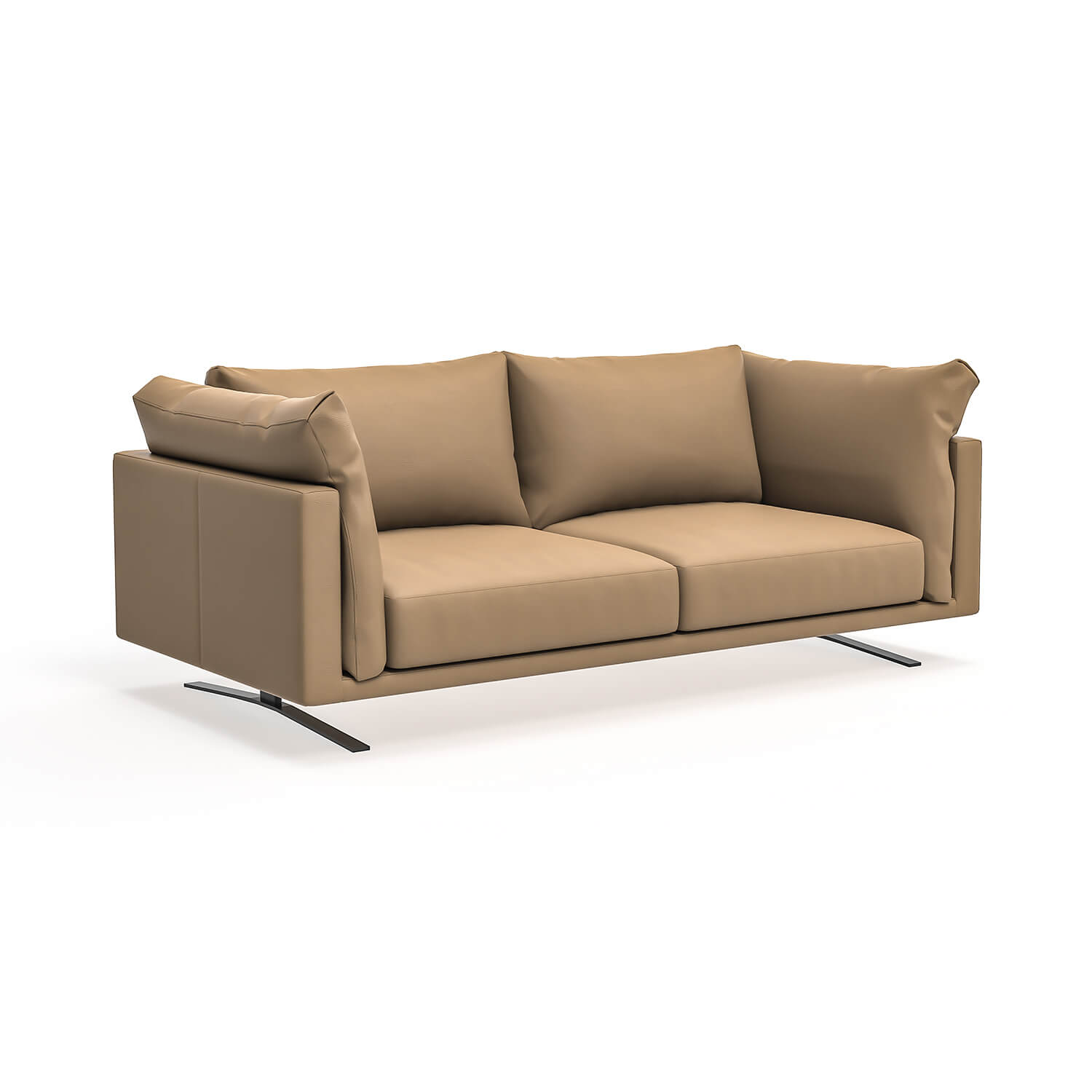
P01 decision boundaryTreat the fill as unverified. Do not guess from the title, body copy, or images. Request the exact SU-ST-Mod code, separate seat/back layers, material grades and proportions, revision/date, and an identified sample. Use the published 900 mm depth, listed widths, and 740 mm total height only as outer product-page dimensions; they do not establish seat dimensions or filling. |
Use the office sofa collection to identify a candidate series, then keep the filling decision on hold until its controlled documents and sample agree.
Request a traceable cushion specification. Send SpaceUnited the model code, intended use, preferred seat feel, and maintenance tolerance through the existing contact page. Ask product engineering to return the seat/back fill schedule, approved BOM or cross-section revision, and matching sample ID before the fill is approved. Use the record above in your inquiry.
Frequently Asked Questions
Can the seat and back cushions use different fillings?Yes. They perform different jobs, so a sofa may use a foam-based seat and a softer fiber or feather-rich back. Ask the supplier to list each position separately instead of giving one fill label for the whole sofa. Does high-density foam always feel firm?No. Density is mass per unit volume, while IFD describes firmness under stated test conditions. Ask for both fields with units and methods when they matter to the specification. How often should feather or fiber cushions be plumped?There is no universal interval for every construction. Use the supplier's care instructions for the exact chamber and layer design, then record the owner, starting interval, action, and observed result. What should procurement do when a product page and specification conflict?Hold the affected claim. Request a model-specific BOM or approved cross-section with revision, date, and sample link. Do not choose a material by guessing from the title, image, or broader product-family copy. |
Approve the construction, not the label
Foam, fiber, and feather are not a simple good-better-best ladder. A procurement-ready choice separates the seat from the back, records every layer, and matches the construction to the required support, appearance, and maintenance capacity.
Use the same sample record for each supplier. Keep method-linked foam values separate from showroom impressions, and hold any model whose public copy conflicts with its controlled documents. That gives product engineering a clear decision instead of a marketing label.
Verify the exact model before approval. Contact SpaceUnited with the intended use and completed record, then request the matching seat/back fill schedule, BOM or cross-section revision, and sample ID. Existing SpaceUnited contact page


Sofa vs Loveseat: Seating, Dimensions & Office Reception Fit
Choose a loveseat when a compact shared seat meets your needs; consider a sofa when you need more sitting room. A loveseat usually means a smaller sofa intended for two people. In a sofa vs loveseat comparison, “sofa” usually refers to the larger option, often intended for three or more.Those names
/ Read More
Sofa Seat Height and Depth: How to Measure Before You Buy
Before buying a reception sofa, check sofa seat height from the floor to a clearly identified point on the seat cushion. Measure usable depth from the front seat edge to the supporting back surface, with the intended cushions in place. Keep empty-seat measurements separate from occupied observations
/ Read More
Are Sofa Bed Good for Office
An office sofa should do more than fill an empty wall. It can shape client impressions, support quick talks, and improve daily comfort. In some offices, it can even provide space for short rest.Still, not every workplace needs the same office sofa. An executive office may need a refined leather sofa
/ Read More
The Complete Guide to Choosing the Perfect Office Sofas
Choosing an office sofa may seem simple, but the wrong one can make a workspace feel crowded, uncomfortable, or less professional. The right office sofa can make guests feel welcome, give employees a better place to rest, and help your office look more polished.An office sofa is not just a seat. It
/ Read More
How long do modular sofas typically last?
You can expect a modular sofa to last 7 to 15 years. High-quality models, like SpaceUnited, can last even longer. Modular sofas are more flexible than regular sofas. You can swap or move sections with ease. Knowing how long they last helps you choose wisely. A strong sofa is good for busy homes and
/ Read More
How to assemble a modular sofa?
You want a stress-free way to set up your new modular sofa. This guide shows you exactly how to assemble modular sofas without any hassle. SpaceUnited’s clever design means you don’t need tools or special skills. You just follow the guide, connect the pieces, and enjoy your sofa right away.
/ Read More
What are the benefits of a modular sofa?
A modular sofa changes how you use your room. You get great flexibility and style that matches your life. You can move your modular sofa for movie nights or family time. It is also good for a quiet afternoon. Many people like how a modular sofa fits any room size. You can pick the look you want.
/ Read More
How to choose a modular sofa?
Choosing a modular sofa starts with knowing your space. Think about how you use your room. Pick a style that fits your life. Think about your daily habits. Who will sit on the sofa? How much do you want to change the setup? Materials are important too. Fabric feels soft and cozy.
/ Read More