


Before buying a reception sofa, check sofa seat height from the floor to a clearly identified point on the seat cushion. Measure usable depth from the front seat edge to the supporting back surface, with the intended cushions in place. Keep empty-seat measurements separate from occupied observations.
The useful result is a record you can compare across samples, not a single comfort number. For reception designers and facilities buyers, the steps below connect that record to an upright sitting trial, a lounge trial, and the questions a supplier still needs to answer.
Read the seat measurements, not the outside size
A listing needs more than a height and a depth. Check what each label refers to before comparing two sofas. Knoll's measurement guide, for example, uses the highest point of an unoccupied cushion for seat height. That is a stated brand method, not a rule every maker follows.
Separate the footprint from the sitting surface | ||
Measurement | Reference to identify | What it cannot establish |
|---|---|---|
Overall height | Floor to highest outside part | Height of the sitting surface |
Unoccupied seat height | Floor to a stated seat point, without a sitter | Height after the cushion compresses |
Overall depth | Maximum front-to-back outline | Available sitting depth |
Usable seat depth | Front seat edge to the supporting back surface | Fit with a different back cushion arrangement |
Ask for a side view with the measurement lines labeled. HUAXUAN's depth guide separates the outer footprint from usable depth and identifies the supporting back cushion. Do not subtract a guessed back thickness from the outside depth. A published range can help sort listings, but it cannot tell you whether a particular visitor will have both back support and foot contact.
Measure one seat position at a time
Use a tape, a rigid ruler or straightedge, and a simple side sketch. Work on a level floor with the specified legs and cushions installed. The following record method keeps the measuring points visible; it is a purchasing aid, not a laboratory test.
Identify the position. Record the model, module code and seat location. Do not carry a straight seat's result over to a corner or chaise position without checking it.
Set the cushion baseline. Put the seat and back cushions in the intended arrangement. List any extra back pillow separately. Photograph that setup if you can; a catalog photograph cannot replace this record.
Measure empty-seat height vertically. Identify the exact point on the sketch: front edge, crown or another supplier-defined point. If the top is sloped or rounded, label additional points separately. Do not press the ruler into the cushion.
Measure usable depth horizontally. Start at the front edge of the seat surface and end at the face of the back cushion or fixed back that supports the sitter. Keep the tape level instead of following the upholstery slope.
Save the reference. Note the unit, date, person measuring and cushion state. Show both endpoints in a side photograph or drawing. Repeat the measurement after changing a cushion or module arrangement.
The horizontal reference and cushion setup follow the issues identified in HUAXUAN's measurement section. If a supplier uses Knoll's highest-point convention, label it that way. Choose one controlling unit for the comparison sheet; keep any inch conversion beside the original value rather than replacing it.
Keep occupied height separate from catalog height
A catalog height does not describe every loaded sitting position. For comparison, the CHFT furniture-measuring leaflet asks for compressed height at the loaded low point. Its clinical form illustrates a different measurement condition from Knoll's unoccupied high point; it does not set a target height for office sofas.
Two endpoints do not make a compression test
Suppose a catalog measures the cushion crown while your seated observation measures a lower point near the back. Subtracting those values would mix location and load effects. This is a hypothetical measurement error, not a result for any sofa.
If you want to record a change, compare the same clearly identified point under stated empty and occupied conditions. If that point is hidden or cannot be measured reliably, keep the occupied observation qualitative rather than inventing a number.
Do not deduct a standard amount from every listed height. PFA's foam-performance explanation distinguishes material firmness, support and fatigue tests. A brief seated observation cannot establish long-term height retention or how far another person will sink.
For a repeat trial, retain the same seat, cushion arrangement and reviewer code.
Record when the observation was taken after sitting down; use the same interval when comparing samples.
Note footwear, posture and whether the feet used the floor or another support. Keep those conditions alongside the observation.
Test the reception task before the lounge posture
For a reception brief, start with normal feet-down sitting and conversation. Then try the relaxed posture if the space also serves as a lounge. Keck's seated checklist looks at foot contact, the seat edge and back support. Paliano Casa's guide also distinguishes upright sitting from lounging; neither source proves that one dimension fits everyone.
Use the task to interpret the trial | ||
Task | What to observe | What to record |
|---|---|---|
Brief upright reception | Can the reviewer use the back support while keeping both feet supported? Does the front edge press behind the knees? | Back and foot contact together; any need to perch forward |
Leaning back in a lounge | Where does the back make contact? Are the legs supported in the intended posture? | Posture, cushion position and any separate foot support used |
Changing position or leaving | Can the reviewer move and get up in their usual way, without strain? | The movement observed and any arm support used; do not require a hands-free rise |
A mixed group of visitors | Do observations differ across reviewers or seat positions? | Separate results rather than one average comfort score |
If a back pillow changes the result, name that pillow and repeat both tasks. Do not quietly remove it from the final specification. Stop a trial that causes pain or feels unsafe; this checklist is not a medical assessment. Where visitors have specific access needs, obtain appropriate project advice rather than choosing an alleged universal easy-rise height.
Build a specification record before approval
Copy this record into your furniture schedule and complete one entry for each configuration you compare. Keep supplier dimensions separate from your own observations. A change of back cushion, leg option or module needs a new entry, even if the product name stays the same.
Identity: model and module code; seat position; leg option; seat and back cushion IDs; any extra pillow; drawing revision and date.
Empty-seat measurements: unit; seat-height value and exact point; usable-depth value and endpoints; photograph or drawing reference; name of measurer.
Occupied observation: reviewer code; posture; footwear; time after sitting; measured point if visible; otherwise a written observation, with no estimated number.
Trial result: back contact and foot support together; front-edge contact; usual movement to stand; reception and lounge results recorded separately.
Next action: continue the comparison if the required data and trial agree; retest after a configuration change; hold the fit decision when data are missing or reviewers report a problem. Name who will resolve it.
A live example shows why the missing fields matter. The SpaceUnited reception-sofa specification lists SU-ST-Mod-6 at 1760 mm wide, 900 mm deep and 740 mm high. Those are outside dimensions; the row does not supply seat height or usable seat depth. Do not use 740 mm or 900 mm to fill the seat fields above.
SU-ST-Mod-6: what still needs confirmation
Request the seat-height and usable-depth measurements with their endpoints, cushion state and exact configuration. The page title says Down Filled, while its body describes foam. Leave the filling unresolved until matching product information clarifies it.
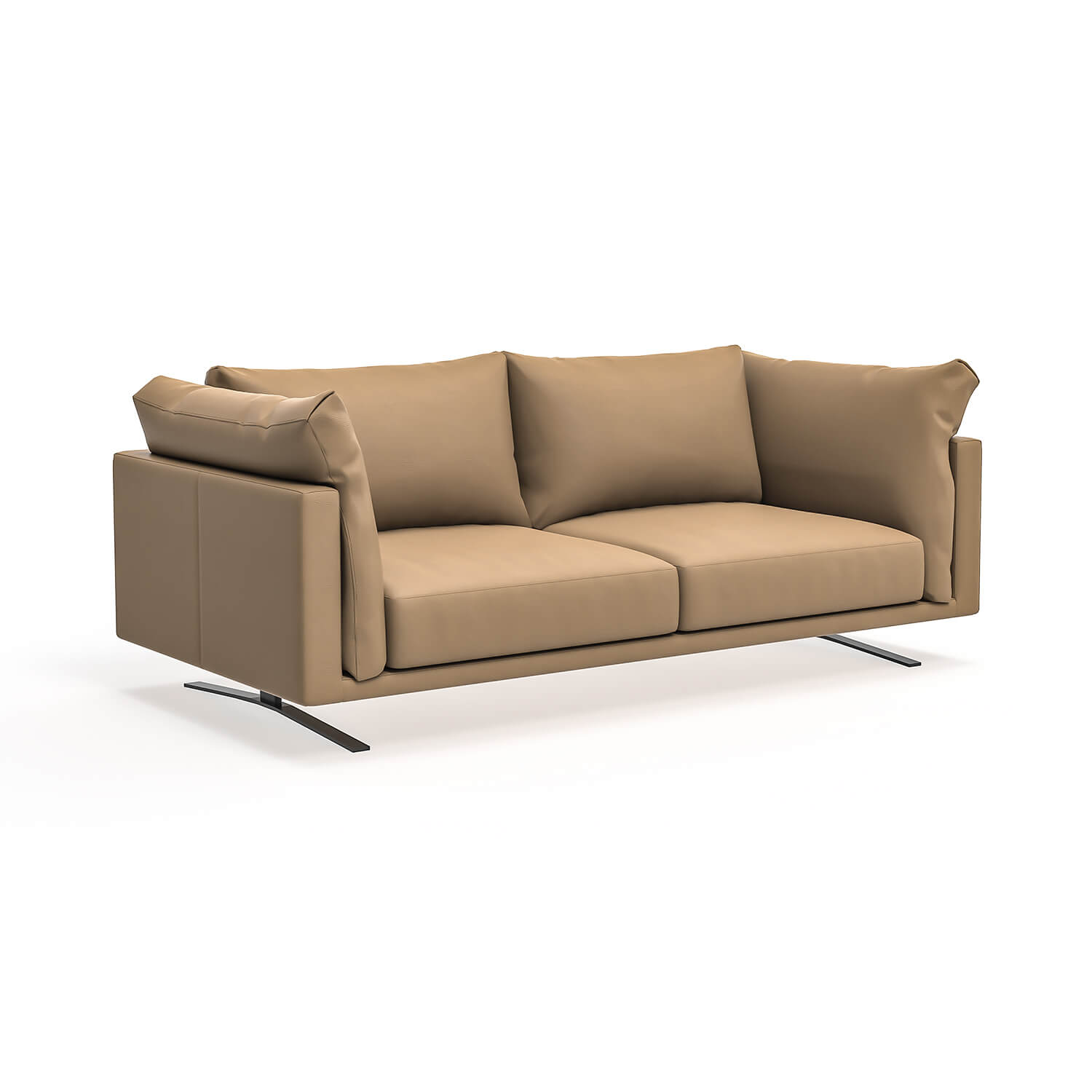
The modular lounge-sofa page also mixes Mountain and Jelly wording. Ask for the exact module code and matching dimension sheet instead of choosing a name from the copy.
For broader room layout and furniture-type choices, use the office sofa buying guide. This record addresses only the seat measurements and trial conditions needed for a fit comparison.
Questions to settle before ordering
Can a back cushion make a deep sofa work for upright sitting?
It can bring the back support forward, but treat that as a different configuration to test. Paliano Casa describes this adjustment; it does not mean any pillow will make a sofa fit. If the pillow is needed, include its identity and position in the purchasing record.
What if I can only compare sofas online?
Use a measured seat you already know as a reference and request labeled dimensions for each candidate. Alcovio suggests using existing furniture to guide a comparison, but matching two numbers does not reproduce cushion response or back shape. Record the seated trial as not performed; a photograph cannot close that gap.
Does a short trial prove that the seat will keep its height?
No. A trial records an initial seated observation, while a durability claim needs relevant testing for the specified construction. PFA's test definitions explain that distinction; do not turn the trial card into a lifespan or anti-sag guarantee.
Confirm the configuration, then decide
Keep the dimension sheet, cushion setup and trial record together. If they describe different configurations, resolve that mismatch before making a fit decision. A sofa that works for one reviewer remains one result, not proof of comfort for every visitor.
Request the missing specifications. Use the SpaceUnited contact page to ask for the exact module's seat measurements and measurement conditions. Include your intended reception or lounge use and the configuration record above.


Are Sofa Bed Good for Office
An office sofa should do more than fill an empty wall. It can shape client impressions, support quick talks, and improve daily comfort. In some offices, it can even provide space for short rest.Still, not every workplace needs the same office sofa. An executive office may need a refined leather sofa
/ Read More
The Complete Guide to Choosing the Perfect Office Sofas
Choosing an office sofa may seem simple, but the wrong one can make a workspace feel crowded, uncomfortable, or less professional. The right office sofa can make guests feel welcome, give employees a better place to rest, and help your office look more polished.An office sofa is not just a seat. It
/ Read More
How long do modular sofas typically last?
You can expect a modular sofa to last 7 to 15 years. High-quality models, like SpaceUnited, can last even longer. Modular sofas are more flexible than regular sofas. You can swap or move sections with ease. Knowing how long they last helps you choose wisely. A strong sofa is good for busy homes and
/ Read More
How to assemble a modular sofa?
You want a stress-free way to set up your new modular sofa. This guide shows you exactly how to assemble modular sofas without any hassle. SpaceUnited’s clever design means you don’t need tools or special skills. You just follow the guide, connect the pieces, and enjoy your sofa right away.
/ Read More
What are the benefits of a modular sofa?
A modular sofa changes how you use your room. You get great flexibility and style that matches your life. You can move your modular sofa for movie nights or family time. It is also good for a quiet afternoon. Many people like how a modular sofa fits any room size. You can pick the look you want.
/ Read More
How to choose a modular sofa?
Choosing a modular sofa starts with knowing your space. Think about how you use your room. Pick a style that fits your life. Think about your daily habits. Who will sit on the sofa? How much do you want to change the setup? Materials are important too. Fabric feels soft and cozy.
/ Read More
What are the different types of modular sofas?
You have more options than ever for choosing a modular sofa. Here are the main types you will find:TypeQuick DefinitionStandard modular sofaSingle seats connect for easy, flexible setupsChaise modular sofaHas a long seat for lying down and relaxingCorner modular sofaMakes an L or U shape to use corn
/ Read More